It Was a Wednesday Night. Nothing Special. That's the Part That Haunts You.
It was not a holiday. It was not a record night. It was a regular Wednesday in March, about 7:30 PM, maybe 40 covers on the books. The kitchen was humming at a comfortable pace. The line was clean. The energy was easy.
Then the flattop flared.
It was nothing dramatic at first. A burger patty with too much fat content hit the grill surface at the wrong angle and the rendered grease pooled near the back edge. A small flame caught. This happens in kitchens. Every cook on the planet has seen a flare-up. You pull the protein, let the flame burn out, and move on. It is a non-event.
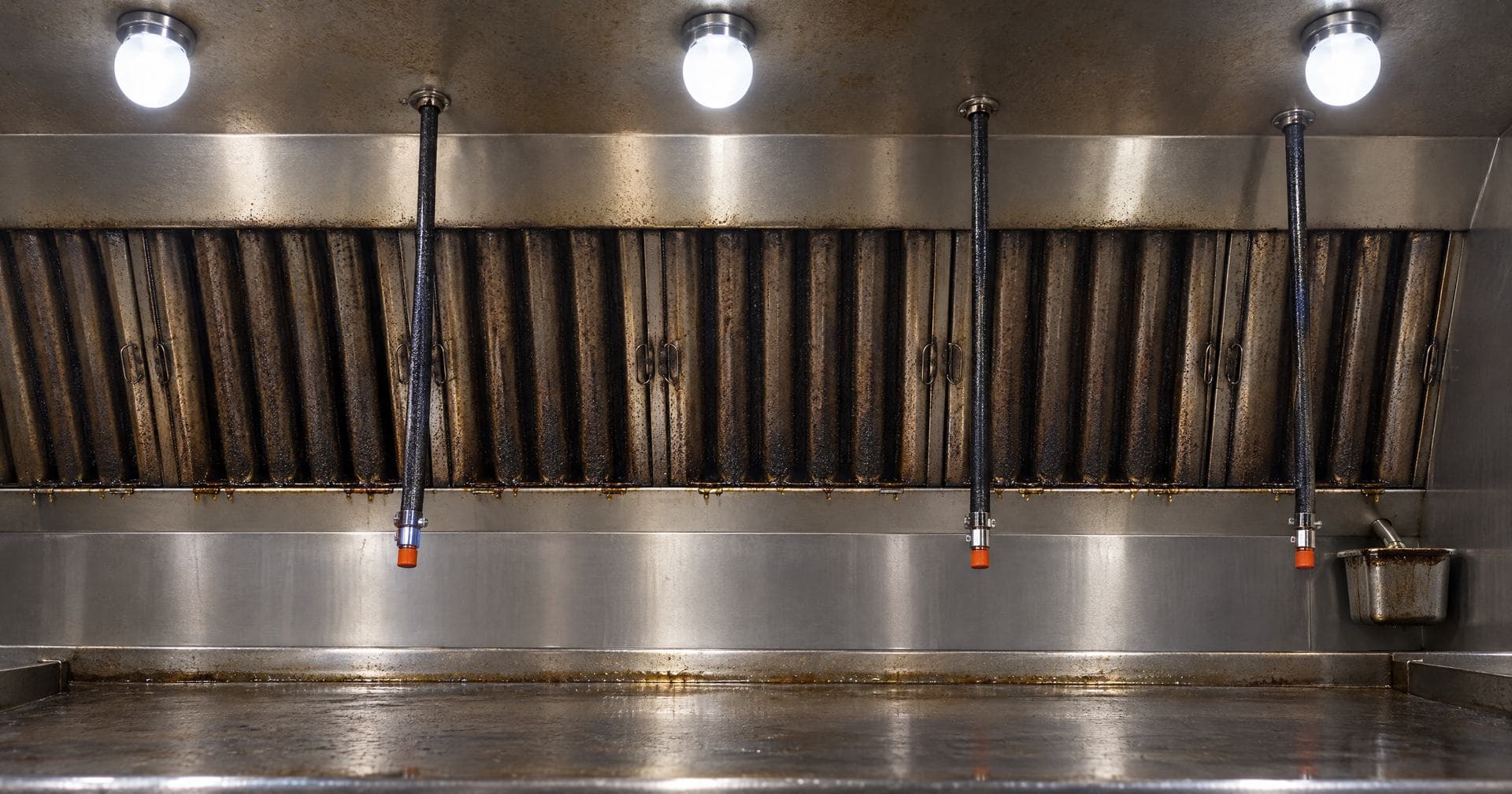
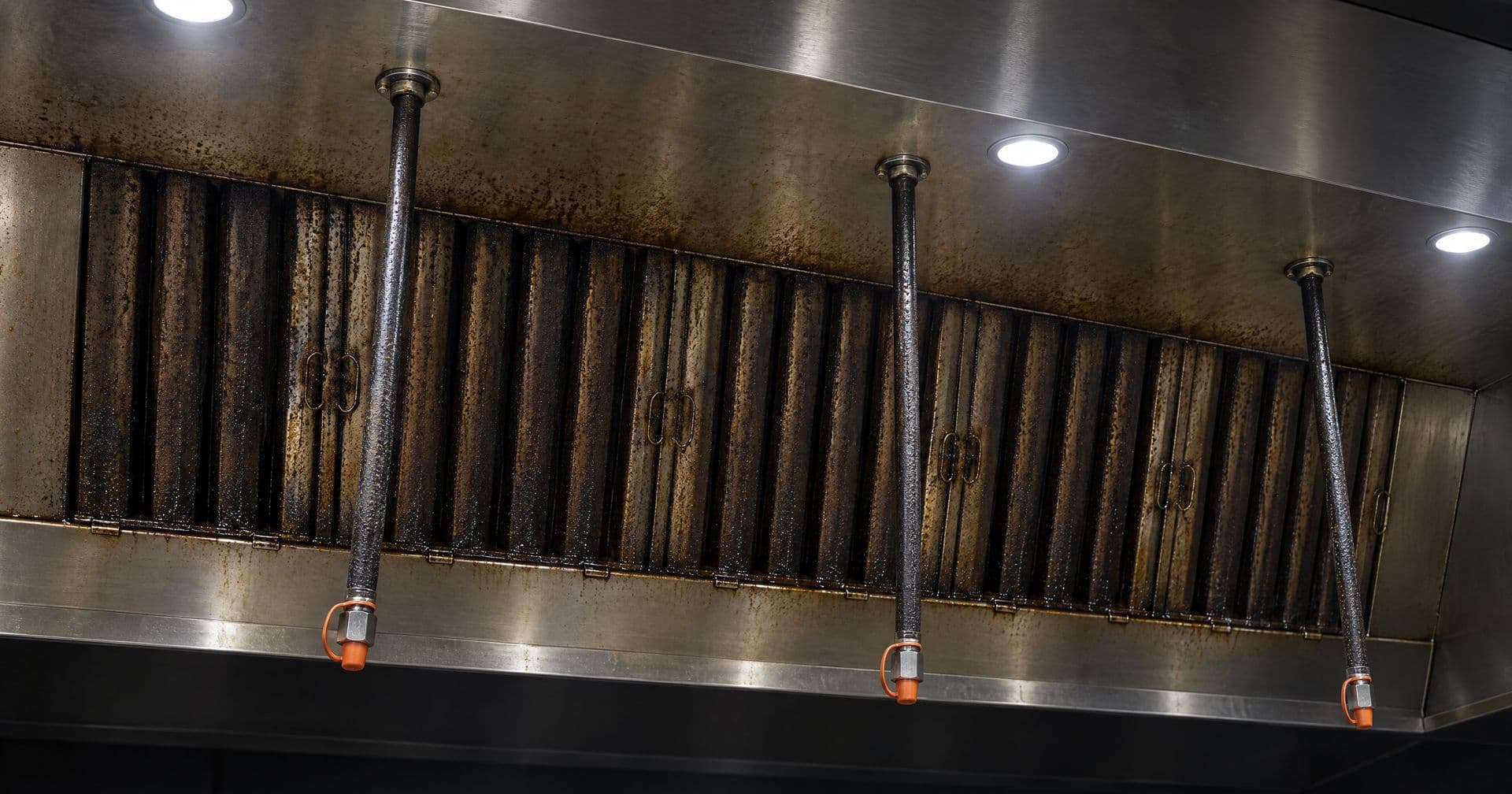
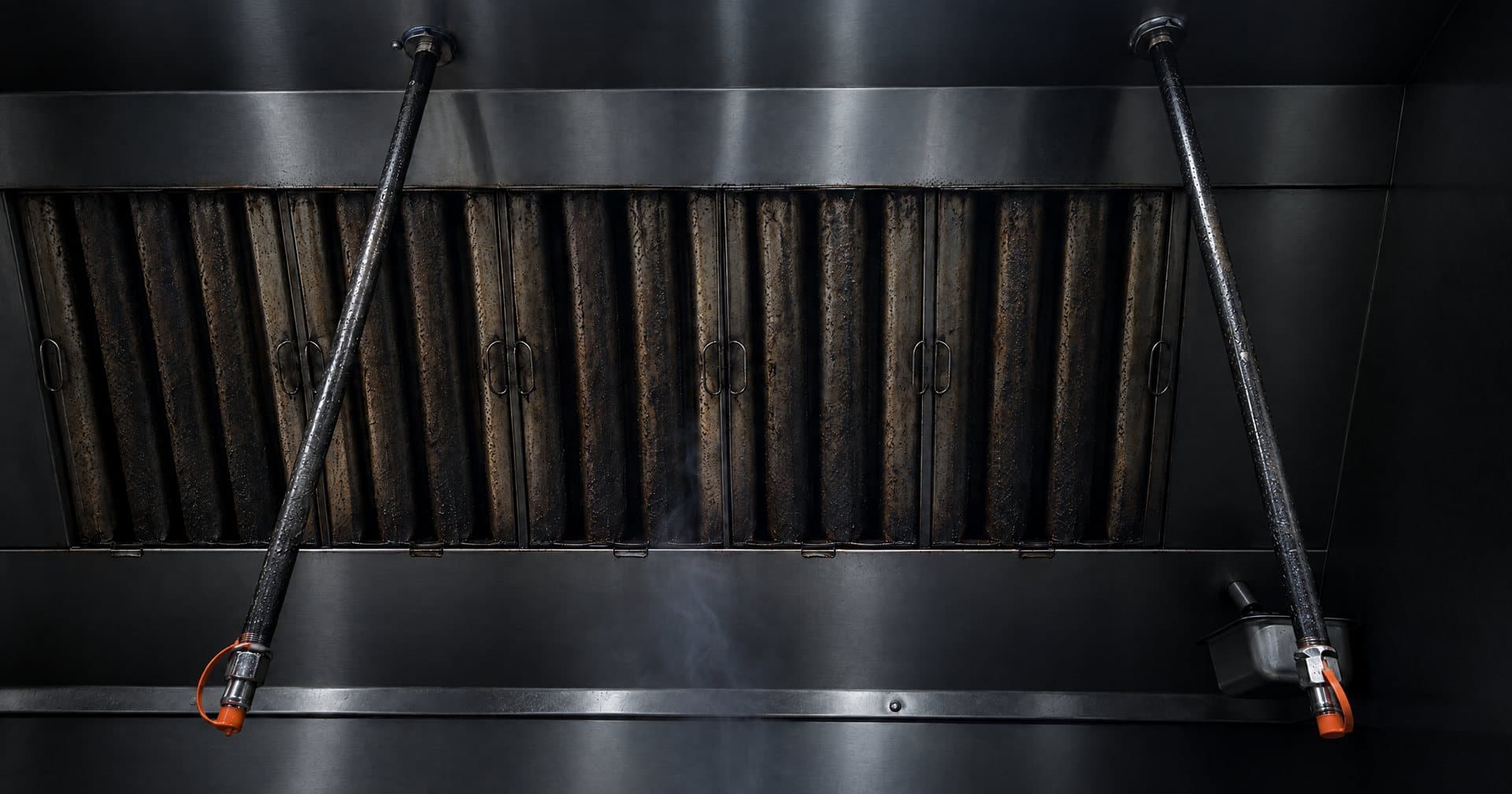
Except this time, it was not a non-event. The flame caught the grease accumulated on the back wall of the hood, the part that had not been professionally cleaned in 18 months. The grease ignited. The flame traveled up the back of the hood interior and into the ductwork above the cooking line. Within 30 seconds, the fire was inside the ductwork and out of sight.
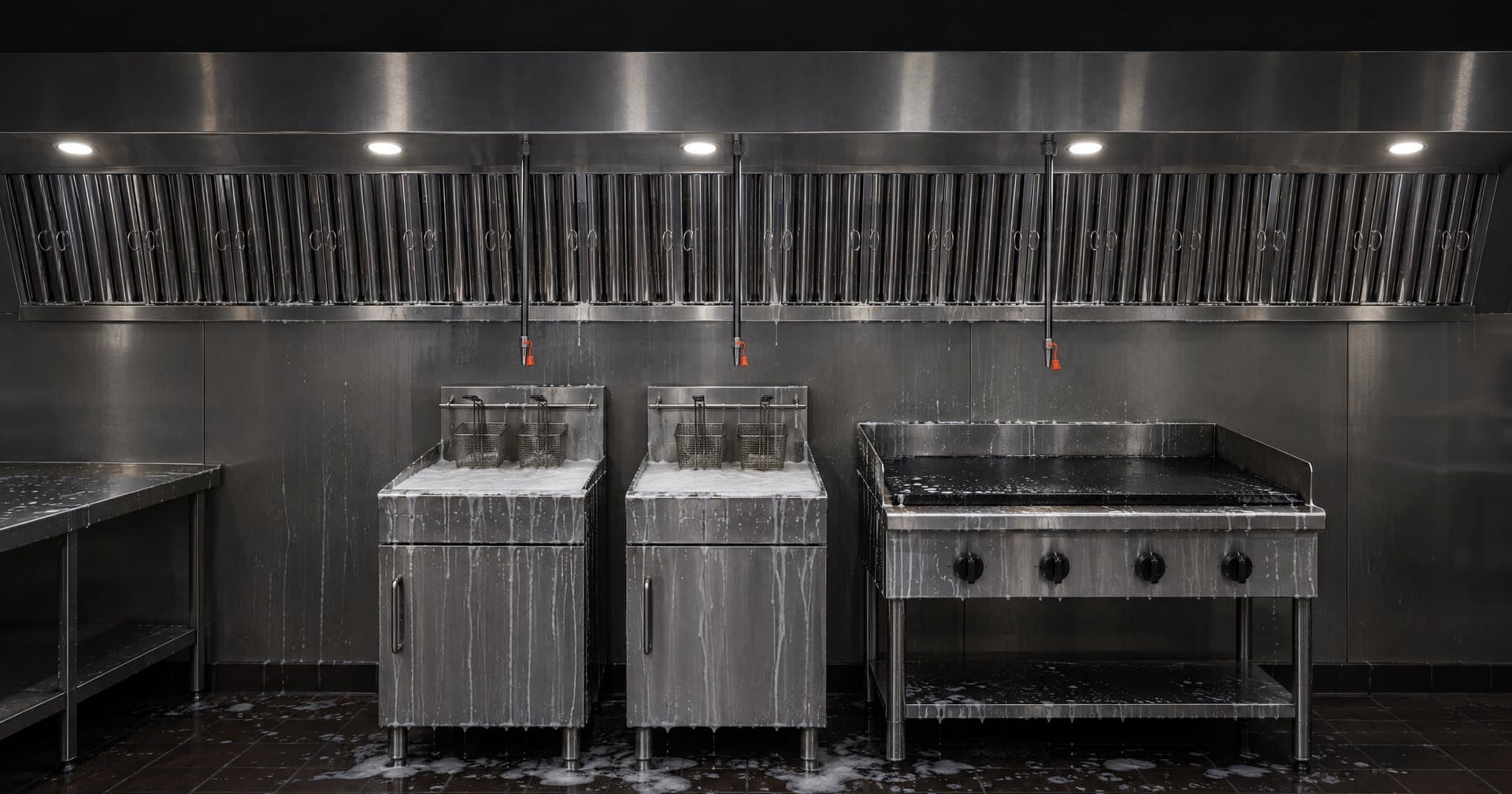
The fire suppression system activated. Chemical agent deployed across the cooking line. The fire on the visible surfaces went out immediately. But the fire in the ductwork continued. The grease buildup inside the duct provided fuel for a fire that was now beyond the reach of the suppression nozzles, which are designed to protect the cooking surface below the hood, not the interior of the duct above it.
The restaurant was evacuated. The fire department arrived in seven minutes. They accessed the roof and found flames coming from the exhaust fan housing, fed by grease that had accumulated in the vertical duct run and the fan assembly over months of missed cleanings. They extinguished the fire from the roof while interior crews confirmed the fire had not breached the ductwork into the ceiling cavity.
Total time from flare-up to extinguishment: 22 minutes.
Total damage: catastrophic.
The Damage Report
When the smoke cleared and the fire marshal completed the investigation, the restaurant owner was looking at the following:
Physical Damage
- Exhaust hood: Destroyed. The fire suppression chemical, combined with the heat damage from the duct fire, rendered the hood and its internal components unusable. Replacement cost: $38,000.
- Ductwork: The vertical duct run from the hood to the roof was fire-damaged and required complete replacement. The fire had weakened the duct seams and compromised the fire-rated enclosure around the duct penetration. Replacement cost: $14,000.
- Exhaust fan: Destroyed. The rooftop exhaust fan was where the fire ultimately vented, and the grease-soaked fan housing and motor were total losses. Replacement cost: $6,500.
- Fire suppression system: Discharged. The entire system required recharge, new nozzles, and recertification. Cost: $4,200.
- Ceiling and wall repair: The area around the hood required new drywall, fire-rated assembly repair, and repainting. The dining room ceiling nearest the kitchen had smoke staining. Cost: $8,500.
- Cooking equipment: The flattop, two burner sections, and the salamander directly under the hood were coated in fire suppression chemical, some of which entered gas lines and control valves. Two pieces required replacement; the rest required professional deep cleaning and recalibration. Cost: $11,000.
- Professional cleaning: The entire kitchen required industrial cleaning to remove smoke residue, chemical agent, and fire debris from every surface, including inside refrigeration units, storage areas, and the dining room. Cost: $7,500.
Total physical damage: approximately $89,700.
Business Losses
- Days closed: 47 days from the fire to reopening. Equipment lead times for the new hood and ductwork drove the timeline. Permitting for the replacement installation added two weeks.
- Lost revenue: The restaurant averaged $8,200 per day in revenue. Over 47 days, that is approximately $385,400 in lost sales. Business interruption insurance covered a portion, but the policy had a 72-hour waiting period and a coverage cap that fell well short of actual losses.
- Staff losses: Of the 23 employees, 8 found other jobs during the closure and did not return. Replacing them after reopening cost an estimated $28,000 in recruiting, training, and overtime for remaining staff.
- Reputation impact: The fire made the local news. Social media posts from neighboring businesses showed fire trucks outside the restaurant. For the first month after reopening, covers were down 30% compared to the same period the previous year. The recovery took three months.
Insurance Outcome
The insurance carrier investigated the fire. The fire marshal's report noted that "significant grease accumulation was observed within the exhaust ductwork and fan assembly, consistent with extended periods without professional cleaning." The carrier requested hood cleaning records. The most recent certificate was from 18 months prior to the fire.
The policy required hood cleaning at intervals consistent with NFPA 96, which for this restaurant's cooking volume was quarterly. The restaurant was approximately four cleaning cycles overdue.
The carrier did not deny the claim outright. Instead, they applied the policy's maintenance negligence sublimit, which reduced the payout by 40%. Of the approximately $90,000 in physical damage, the carrier paid $54,000. The restaurant owner absorbed the remaining $36,000 out of pocket, in addition to the business losses not fully covered by business interruption insurance.
The following year's insurance renewal came with a 65% premium increase, adding approximately $7,800 per year to the restaurant's operating costs, a penalty that will persist for at least three to five years.
The 18 Months That Led to This
The restaurant owner is not a negligent person. They are a working owner who is in the restaurant six days a week. They care about their business, their staff, and their customers. So how did 18 months go by without a hood cleaning?
Here is how it happened, and it is a pattern we see repeated across the DMV:
- Month 1-3 after last cleaning: The next cleaning was due. The hood cleaning company called to schedule. The owner was dealing with a staffing crisis and said they would call back to schedule. They did not call back.
- Month 4-6: The cleaning company called again. The owner was in the middle of a menu change and asked to push it to next month. Next month came and went.
- Month 7-9: The owner forgot. The cleaning company stopped calling because their automated reminder system had flagged the account as unresponsive. Nobody followed up.
- Month 10-12: The owner noticed the hood looked greasy. They had a cook wipe down the visible surfaces during a slow night. The interior of the ductwork, where grease accumulates most dangerously, was not accessible without professional equipment and was not touched.
- Month 13-18: The hood became part of the background. The owner stopped seeing the grease because they saw it every day. The exhaust fan on the roof, out of sight, was accumulating grease at an accelerating rate because the degraded capture efficiency of the dirty filters meant more grease-laden vapor was reaching the ductwork and fan. The fire risk increased with every service.
Total cost of the four quarterly hood cleanings that were skipped: approximately $1,800 to $2,400.
Total cost of skipping them: approximately $150,000 and counting, plus 47 days of closure, 8 lost employees, a damaged reputation, and five years of elevated insurance premiums.
Why Grease Fires in Ductwork Are Uniquely Dangerous
A grease fire on a cooking surface is manageable. Every commercial kitchen has fire suppression for exactly this scenario. The system deploys, the fire goes out, the kitchen needs cleaning, and you are back in business within a day or two. It is disruptive but not devastating.
A grease fire that enters the ductwork is a fundamentally different event because:
- The fire is inaccessible. Ductwork runs through ceiling cavities, between floors, and through the roof. Once the fire is in the duct, it cannot be reached by kitchen fire suppression systems. Only the fire department, accessing the ductwork from the roof or by opening the ceiling, can extinguish it.
- Grease in ductwork burns hot. Accumulated cooking grease burns at temperatures exceeding 600 degrees Fahrenheit. At these temperatures, the fire can weaken ductwork joints, compromise fire-rated assemblies around the duct penetrations, and ignite combustible materials in the ceiling cavity.
- The fire can spread beyond the duct. If ductwork joints fail or fire-rated assemblies are breached, the fire enters the building's structural cavity. At this point, the fire can spread horizontally above the ceiling, potentially involving the entire building. This is how restaurant fires become building fires.
- The fire is fed by the exhaust system itself. The exhaust fan, if it continues to run, actively draws air through the burning ductwork, supplying oxygen to the fire and intensifying it. Modern fire suppression systems are designed to shut down the exhaust fan on activation, but if the shutdown relay fails or the fan is on a separate circuit, the fan becomes a bellows feeding the fire.
NFPA 96: The Cleaning Schedule That Exists for This Exact Reason
NFPA 96, the Standard for Ventilation Control and Fire Protection of Commercial Cooking Operations, specifies cleaning frequencies based on the type and volume of cooking:
- Monthly: Solid fuel cooking (wood, charcoal), high-volume operations like 24-hour restaurants
- Quarterly: Most full-service restaurants with fryers, grills, ranges, and woks
- Semi-annually: Moderate-volume cooking operations, pizza ovens, sheet pans
- Annually: Low-volume cooking, churches, seasonal operations
Most full-service restaurants in the DMV fall into the quarterly category. That means professional hood and duct cleaning four times per year, at a cost of $300 to $700 per cleaning depending on hood size and ductwork length. Annual cost: $1,200 to $2,800.
This schedule exists because fire protection engineers calculated the rate at which grease accumulates in exhaust systems under various cooking conditions and determined the intervals at which accumulation reaches hazardous levels. The quarterly schedule for standard restaurant operations is not arbitrary. It is the result of fire science research and casualty data analysis.
Ignoring it is not saving money. It is borrowing against a catastrophe.
The Prevention Program That Costs Less Than One Night's Revenue
Here is what the restaurant in this story would have spent on a complete annual prevention program:
- Quarterly professional hood and duct cleaning: $1,200 to $2,800 per year
- Semi-annual fire suppression inspection: $500 to $1,000 per year
- Quarterly HVAC and makeup air maintenance: $1,400 to $2,800 per year
- Monthly filter checks by kitchen staff: $0 (staff time only)
Total annual prevention cost: $3,100 to $6,600.
That is less than one strong Saturday night's revenue. It is less than one month's insurance premium. It is less than 2% of the total cost of the fire that almost ended this business.
What the Owner Does Differently Now
The restaurant reopened 47 days after the fire. The owner rebuilt the kitchen with new equipment, new ductwork, and a new hood system. They hired a kitchen ventilation maintenance company, specifically one that specializes in commercial kitchens, and they have not missed a single scheduled service since.
Here is what they do now that they did not do before:
- Quarterly hood and duct cleaning is on auto-schedule. The cleaning company comes every 13 weeks regardless. It is not negotiable. It is not postponable. It is on the calendar like rent.
- The maintenance binder lives in the office. Every cleaning certificate, every HVAC service record, every fire suppression inspection goes into a binder on the desk. If the insurance company calls, the binder is ready.
- Staff does weekly filter checks. Every Monday, the opening prep cook pulls the baffle filters, checks for grease loading, and cleans or flags any that need attention. It takes 10 minutes.
- The exhaust fan gets inspected quarterly. The HVAC technician checks the rooftop exhaust fan during every quarterly visit, looking at belt condition, grease accumulation in the housing, and bearing condition. This was the component that let the fire escape the building, and it is now the component that gets the most attention.
The owner told us: "I saved maybe $2,000 by skipping those cleanings. It cost me $150,000 and 47 days of my life. I will never skip another one."
Do Not Be This Story
Qwick Services and Solutions provides quarterly HVAC and makeup air maintenance for commercial kitchens across Virginia, DC, and Maryland. We coordinate with licensed hood cleaning contractors to ensure your entire exhaust and ventilation system, from the cooking surface to the rooftop fan, is maintained on the schedule that keeps you safe, compliant, and insured.
If you cannot remember when your hood was last professionally cleaned, if your fire suppression certification tag shows a date more than six months ago, or if you have been putting off maintenance because the kitchen is busy and the schedule is tight, stop putting it off.
The fire does not wait for a convenient time. It does not check whether you have been busy. It finds the grease that accumulated while you were focused on everything else, and it ignites on a random Wednesday night when nothing special was happening.
The cost of prevention is a line item. The cost of a fire is a chapter in your life you never want to read.