The Call Every Restaurant Owner Dreads
It is a Tuesday morning. You are standing in your restaurant looking at the damage from last night's kitchen fire. The fire suppression system deployed. The fire department came. Nobody was hurt. But the exhaust hood is destroyed, the ceiling above the cooking line is charred, the kitchen is coated in chemical suppressant, and you cannot open for business.
You call your insurance company. You file a claim. You expect the process to take a few weeks, maybe a month. Inconvenient, but manageable. Your policy covers fire damage. You have been paying premiums for years.
Three weeks later, the adjuster's report comes back. Claim denied.
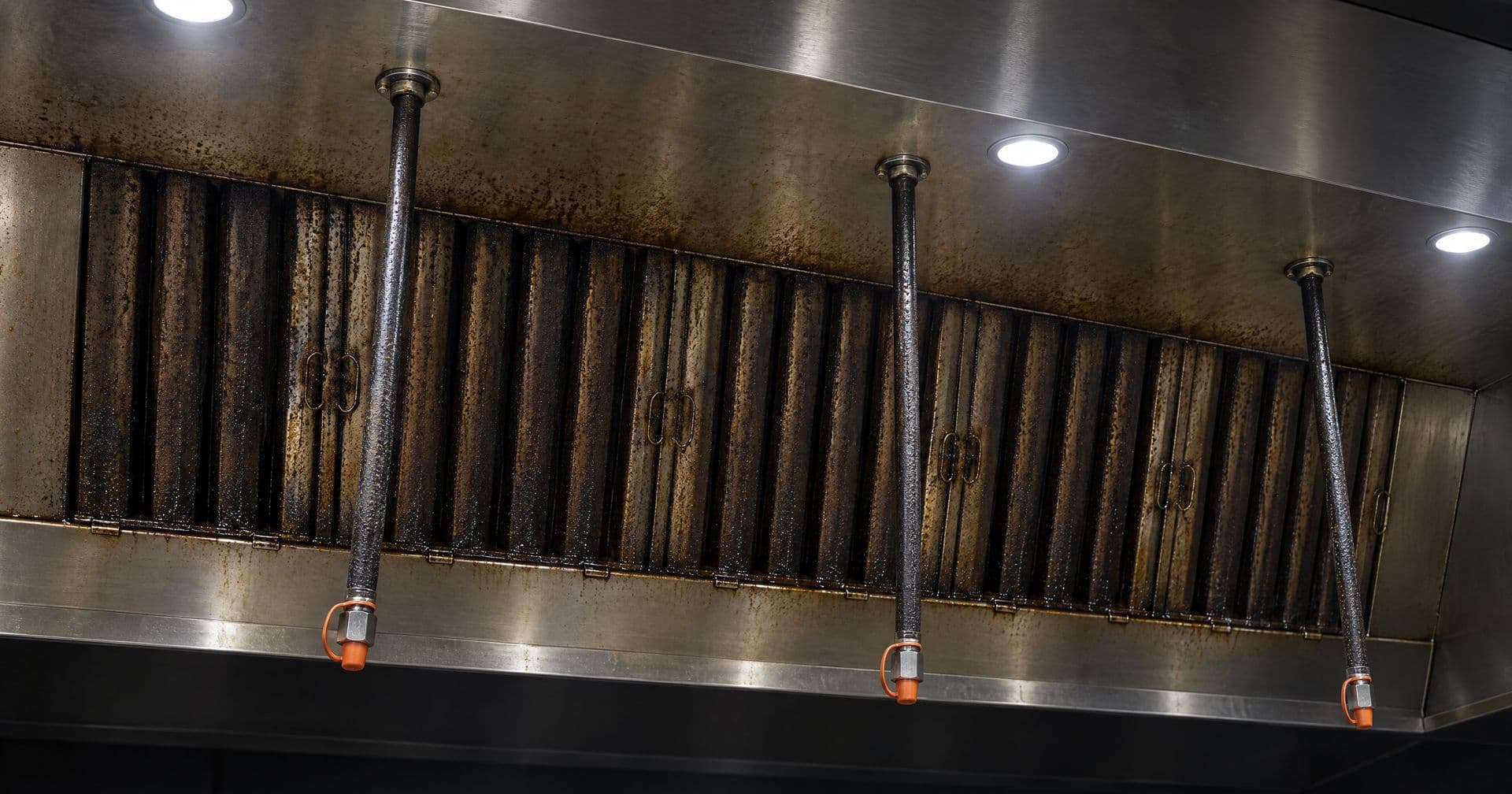
The reason: the investigation found that the fire originated in grease-laden ductwork that had not been professionally cleaned in over 18 months. Your policy requires regular maintenance of fire protection systems as a condition of coverage. The last hood cleaning certificate in your records is from 22 months ago. The fire was, in the adjuster's language, "a foreseeable consequence of deferred maintenance," and therefore excluded under the policy's maintenance negligence clause.
You are now looking at $60,000 to $150,000 in uninsured repair costs, plus lost revenue for every day you are closed, plus the cost of temporary kitchen arrangements if you want to keep your staff employed while the kitchen is rebuilt.
This scenario is not rare. It happens to restaurants across the DMV every year. And it is almost always preventable.
How Insurance Companies Evaluate Restaurant Kitchen Risk
Restaurant insurance is fundamentally different from standard commercial insurance because the risk profile is fundamentally different. A restaurant has open flames, high-temperature cooking equipment, large volumes of combustible grease, electrical systems under constant heavy load, and employees working in physically demanding conditions. Insurers know this, and they price policies accordingly.
What most restaurant owners do not realize is that their policy is not just a contract to pay for losses. It is a contract that requires them to maintain specific conditions in exchange for coverage. When those conditions are not met, the insurer's obligation to pay can be reduced or eliminated entirely.
What Insurers Require and Inspect
Commercial insurance policies for restaurants in Virginia, DC, and Maryland typically include requirements related to kitchen mechanical systems. The specific language varies by carrier and policy, but common requirements include:
- Regular professional cleaning of the exhaust hood and ductwork. Most policies require cleaning at intervals specified by NFPA 96, which is monthly, quarterly, semi-annually, or annually depending on the type and volume of cooking. For high-volume restaurants with solid fuel cooking or high-grease operations, the requirement is monthly or quarterly. For moderate-volume operations, it is semi-annual. Many carriers simplify this to "at least quarterly" for all restaurant types.
- Current fire suppression system certification. The kitchen fire suppression system must be inspected and certified by a licensed contractor at least semi-annually. An expired certification is a policy compliance issue that can affect coverage.
- Functional exhaust and ventilation systems. The policy typically requires that kitchen ventilation systems be maintained in working order. A non-functional exhaust fan, a disabled makeup air system, or a hood operating without all its filters are all conditions that an adjuster can point to as maintenance failures.
- Documentation of maintenance. Some carriers explicitly require that maintenance records be maintained and available for review. Others imply it through the general maintenance requirements. In either case, when a claim is filed, the adjuster will ask for records, and the absence of records is treated as evidence of non-compliance.
How Claims Get Denied
Insurance claim denials related to kitchen ventilation and maintenance typically fall into three categories:
1. Fire Damage Claims: The Maintenance Negligence Exclusion
Kitchen fires are the most common and most costly claims for restaurant insurers. When a fire occurs and the investigation reveals deferred maintenance on the exhaust system, grease buildup in ductwork, an expired fire suppression certification, or a non-functional component of the ventilation system, the carrier has grounds to deny or reduce the claim.
The logic from the insurer's perspective is straightforward: the policy requires maintenance. Maintenance was not performed. The fire resulted from or was worsened by the lack of maintenance. Therefore, the loss was preventable and falls outside the scope of coverage.
Even when the claim is not fully denied, it can be significantly reduced. An adjuster might determine that the fire would have been contained by the suppression system if it had been properly maintained, or that damage would have been limited to the hood area if the ductwork had been clean. In these cases, the carrier pays for what a properly maintained system would have experienced, and the restaurant absorbs the difference.
2. Workers' Compensation Claims: Heat-Related Illness and Air Quality
When a kitchen employee files a workers' compensation claim for heat-related illness, respiratory issues, or injuries that an attorney links to kitchen conditions, the employer's workers' comp carrier investigates the kitchen environment. If the investigation reveals that the kitchen routinely operates at temperatures exceeding safe levels due to HVAC and ventilation system failures, the employer's experience modification rate, the factor that determines their workers' comp premium, can increase.
A single significant workers' comp claim can increase your experience modification rate for three to five years. For a restaurant with an annual workers' comp premium of $15,000, an experience mod increase from 1.0 to 1.3 means an additional $4,500 per year, or $13,500 to $22,500 over the life of the modification. And that is before the cost of the claim itself.
In the DMV's competitive labor market, a workers' comp claim for heat-related illness also creates legal exposure if the employee's attorney can demonstrate that the employer knew about the ventilation deficiency and failed to address it. Maintenance records, or the lack thereof, become key evidence.
3. Liability Claims: Third-Party Injuries and Property Damage
If a kitchen fire damages an adjacent business, or if smoke or odor from your kitchen causes documented harm to a neighboring property's operations, your general liability policy responds. But if the investigation reveals that the damage was caused or worsened by deferred maintenance on your ventilation system, the carrier's obligation becomes complicated.
A neighboring business that loses revenue because smoke from your kitchen fire infiltrated their space has a claim against you. Your insurer pays, but then examines whether the fire was caused by your negligence in maintaining the exhaust system. If it was, your premiums increase significantly, and in some cases, the carrier may choose not to renew your policy at all.
Being dropped by an insurance carrier, or being designated a "high risk" account, means your next policy will cost 40% to 100% more than what you were paying. For a restaurant with a $12,000 annual insurance package, that is an increase of $4,800 to $12,000 per year for the next three to five years.
The Premium Impact of Maintenance (or Lack Thereof)
Beyond claim denials, your maintenance practices directly affect your insurance premiums in ways that accumulate over time:
Favorable Factors That Reduce Premiums
- Documented quarterly maintenance program. Carriers who see a consistent maintenance history view you as a lower-risk account. Some carriers offer premium discounts of 5% to 15% for documented maintenance programs.
- Current fire suppression certification. This is baseline compliance, but having it current and documented avoids surcharges that some carriers impose for lapses.
- Professional hood cleaning records. Hood cleaning certificates from a licensed contractor demonstrate compliance with NFPA 96, which is the standard insurers reference most frequently.
- Recent system upgrades. If you have invested in new exhaust equipment, updated fire suppression systems, or upgraded HVAC, document it and share it with your insurance broker. Modern equipment with current warranties reduces the carrier's risk assessment.
Unfavorable Factors That Increase Premiums
- Claims history. Any fire-related claim, even one that is paid, increases your premiums for three to five years. A denied claim is worse, because it remains on your record as an incident without the mitigating factor of carrier resolution.
- No maintenance documentation. When your broker shops your renewal and the underwriter asks for maintenance records and you cannot produce them, the underwriter prices the policy as if maintenance is not being performed, because they have no evidence that it is.
- Violations on record. Health department or fire marshal violations related to kitchen ventilation are discoverable by underwriters. A restaurant with recent ventilation violations is a higher-risk account.
- Building age and system age. Older mechanical systems are more likely to fail. If your exhaust hood, RTUs, and makeup air units are approaching end of life and you have not budgeted for replacement, the underwriter factors that increased failure risk into your premium.
The Insurance Maintenance Checklist
Here is the minimum maintenance program that satisfies most commercial insurance requirements for restaurants in the DMV and creates the documentation trail that protects your coverage:
Monthly
- Clean exhaust hood baffle filters (or replace disposable filters)
- Visual inspection of hood interior for grease accumulation
- Verify fire suppression system is armed and indicator lights are normal
- Document in a dated log with the name of the person who performed each task
Quarterly
- Professional hood and exhaust duct cleaning by a licensed, insured contractor
- Obtain and file the cleaning certificate with date, scope, and contractor credentials
- Professional HVAC and makeup air unit service with documented work performed
- File all service records in your maintenance binder
Semi-Annually
- Fire suppression system inspection and recertification by a licensed fire protection contractor
- File the inspection certificate with your maintenance records
- Send a copy to your insurance broker for your file
Annually
- Comprehensive ventilation system assessment including airflow measurement and balance verification
- Review all mechanical equipment for condition and remaining useful life
- Provide a complete copy of your annual maintenance records to your insurance broker before your policy renewal
What to Do Right Now
- Pull out your insurance policy and read the maintenance requirements. They are typically in the "Conditions" section or in an endorsement specific to restaurant operations. Understand exactly what your carrier requires.
- Gather your maintenance records. Hood cleaning certificates, HVAC service records, fire suppression inspections. If you have them, organize them. If you do not have them, that tells you something important about your current risk exposure.
- Schedule any overdue maintenance immediately. If your hood has not been cleaned in over three months, if your fire suppression system certification is expired, or if your HVAC has not been serviced in over six months, you have a gap in your coverage protection that needs to close before the next incident.
- Talk to your insurance broker. Ask specifically whether your current maintenance practices satisfy the policy requirements. Ask whether documented maintenance could qualify you for a premium discount. Ask what the premium impact would be of a fire claim with versus without maintenance records.
Protect Your Coverage Before You Need It
Qwick Services and Solutions provides quarterly HVAC and makeup air maintenance, coordinates with licensed hood cleaning contractors, and maintains documentation that satisfies insurance carrier requirements for restaurants across Virginia, DC, and Maryland.
Our maintenance programs include detailed service records, before-and-after documentation, and organized filing that gives you the evidence trail your insurance policy requires. When a claim happens, and in the restaurant business, it is when, not if, your records are your first line of defense.
The maintenance that keeps your insurance valid costs less per year than a single month's premium increase after a denied claim. Protect your coverage. Protect your business.
Keep reading: how often commercial kitchen hoods should be cleaned to keep coverage valid, and who is responsible for hood cleaning — landlord or tenant.