Bethesda, Maryland, has built a restaurant scene that punches well above its weight. Within a few blocks of the Bethesda Metro station, you can find restaurants that have earned national recognition alongside neighborhood staples that have been feeding the community for decades. The dining public knows Bethesda for the quality of its food. What the dining public does not see is the condition of the exhaust systems behind the kitchens that produce it.
Bethesda''s restaurant district is concentrated in a tight urban core where property values are among the highest in Montgomery County. The buildings are a mix of older low-rise commercial structures, mid-rise office buildings with ground-floor restaurant spaces, and newer mixed-use developments. The restaurant spaces themselves range from expansive dining rooms in purpose-built commercial buildings to narrow converted storefronts where the kitchen occupies half the total square footage. In every case, the exhaust system has to navigate whatever the building''s original architects left room for — which, in Bethesda, is often not much.
The Access Problem
Bethesda''s restaurant exhaust systems are some of the hardest to service in the entire DC metropolitan area. The combination of dense urban construction, shared building walls, limited rooftop access, and constrained kitchen layouts means that a hood cleaning crew in Bethesda routinely faces conditions that would be unusual in a suburban restaurant.
Rooftop access is the first challenge. Many Bethesda restaurant buildings do not have interior roof access. The hood cleaning crew needs to reach the rooftop exhaust fan, which means either an exterior ladder — if one exists and is in safe condition — or a portable ladder brought to the site, which requires sidewalk space in a pedestrian-heavy downtown environment. Some buildings require coordination with adjacent property owners for access through neighboring structures. The logistics of simply reaching the equipment can add an hour to a service call that would take fifteen minutes at a suburban strip mall.
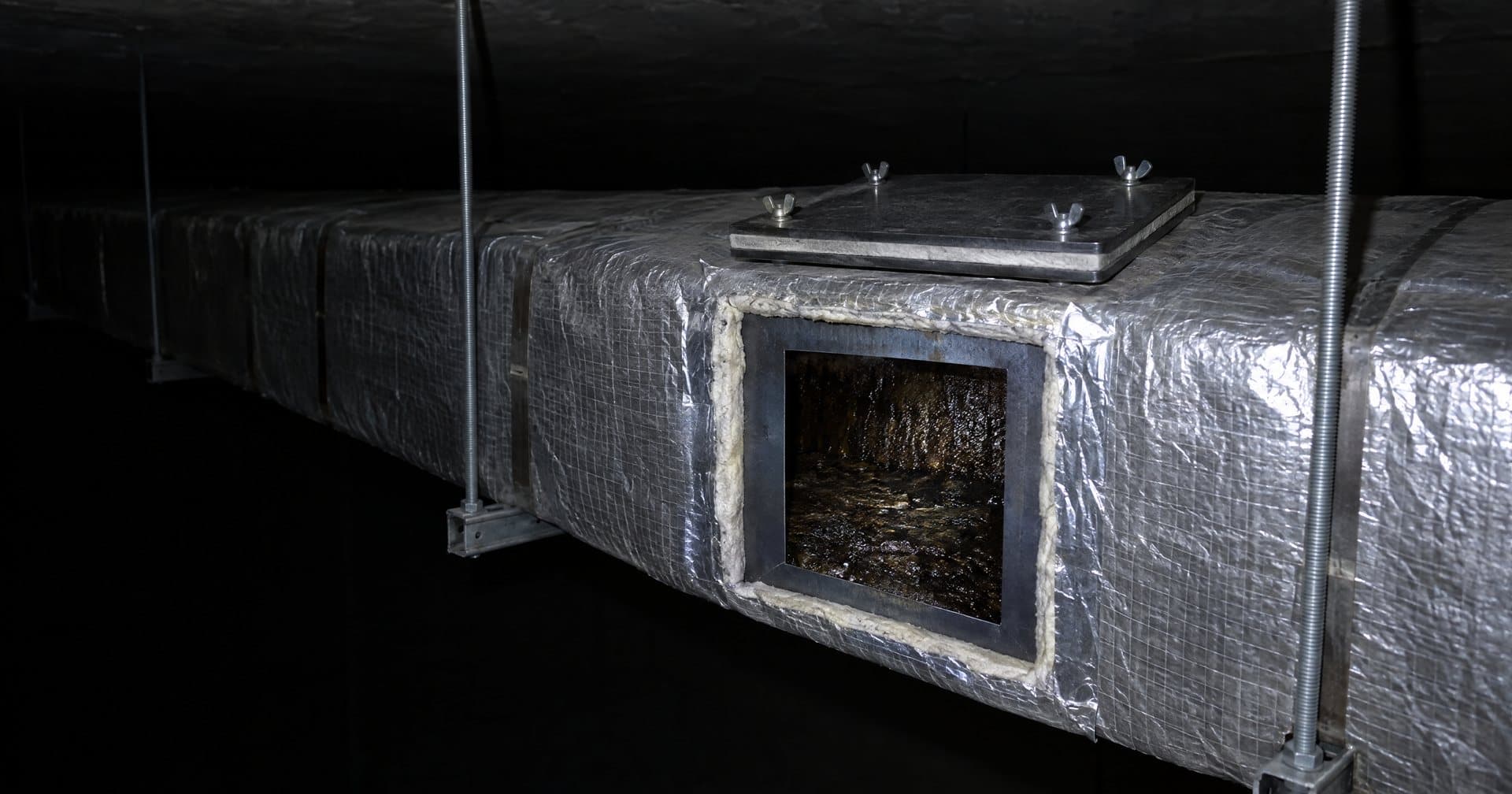
Below the roof, the ductwork presents its own access challenges. In older Bethesda buildings, the original duct installation may have included minimal access panels — the bare minimum required at the time of construction. Modern NFPA 96 standards call for access at every change of direction and at intervals that allow full cleaning of the duct interior. Retrofitting additional access panels into a duct system that runs through a finished ceiling in a restaurant dining room is disruptive and expensive, so it does not happen. The result is duct sections that have never been properly cleaned because no one can physically reach them.
Montgomery County Fire Code
Bethesda falls within Montgomery County, which enforces the Maryland State Fire Prevention Code through the Montgomery County Department of Fire and Rescue Services, Division of Fire Code Compliance. NFPA 96 is incorporated by reference, and the county''s fire inspectors actively inspect commercial cooking operations for compliance.
Montgomery County has a reputation for rigorous fire code enforcement. Inspectors in the Bethesda district are familiar with the specific challenges of the area''s restaurant buildings and know which operations have histories of deferred maintenance. A restaurant that was cited for exhaust system deficiencies at a previous inspection and has not corrected the issue will receive escalating enforcement action.
The cleaning frequency requirements apply based on cooking type and volume:
- Monthly — high-volume charbroiling, solid fuel cooking, wok operations
- Quarterly — standard full-service restaurant cooking
- Semi-annually — moderate-volume operations
- Annually — low-volume operations
Most Bethesda restaurants fall into the quarterly category, with a significant number of high-volume operations that should be on monthly schedules. The restaurants that are meeting their required frequency tend to be the ones affiliated with restaurant groups or management companies that have systematic maintenance programs. The independent operators — often the ones producing the most interesting food — are the ones most likely to be behind.
The Upscale Kitchen Paradox
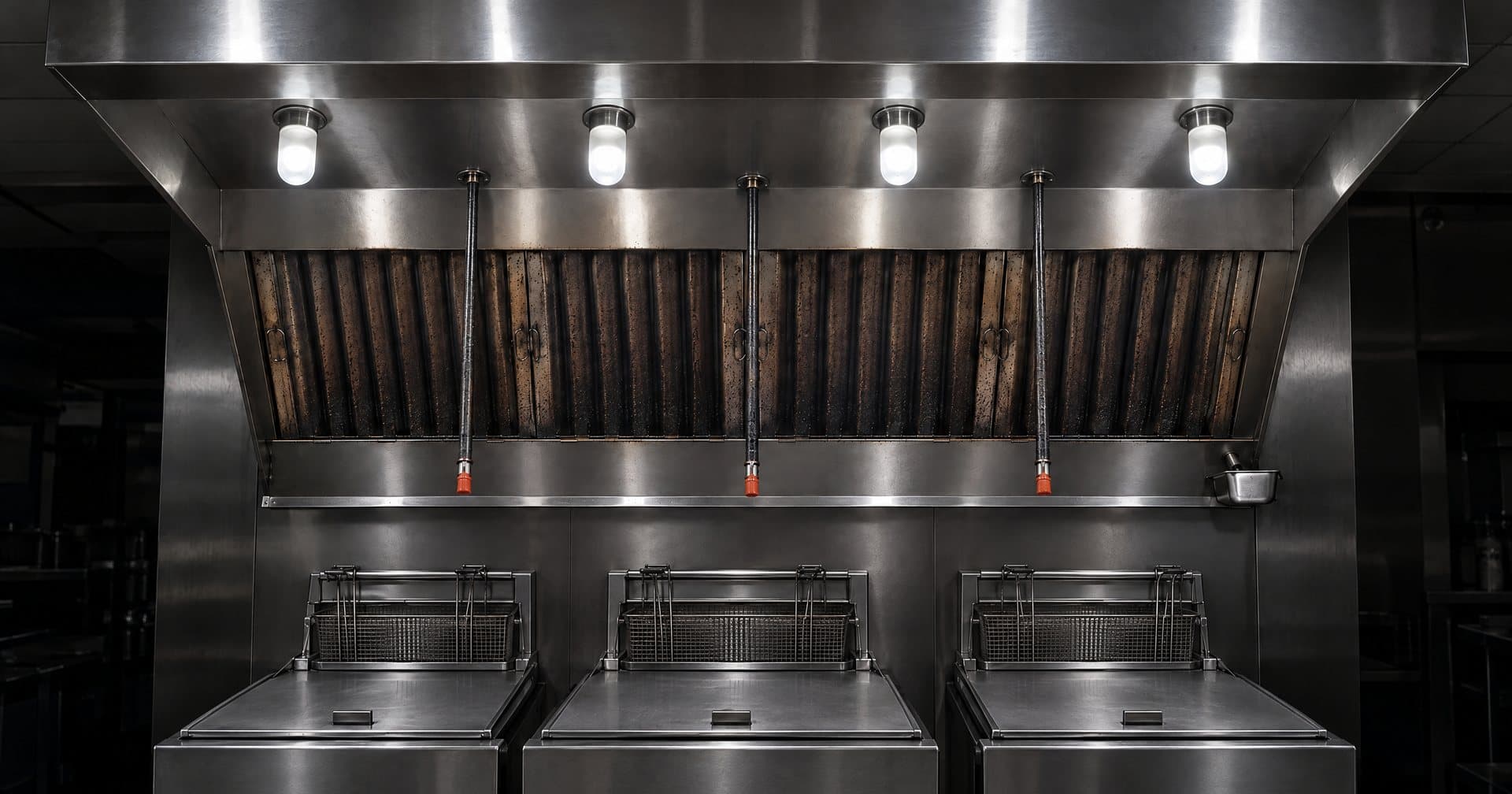
Bethesda''s upscale restaurant kitchens present a paradox. The front of house is immaculate — polished surfaces, careful lighting, attentive service. The kitchen is typically well-organized and clean at the visible level. But the exhaust system exists in a space that neither the dining guest nor the line cook ever sees: inside the duct, above the ceiling, on the roof. An operator who takes enormous pride in the visible cleanliness of the kitchen may have ductwork that would fail an inspection.
The paradox extends to cost perception. An operator who spends thousands of dollars monthly on premium ingredients, front-of-house staffing, and dining room aesthetics may balk at a four-hundred-dollar quarterly hood cleaning as an unnecessary expense. The kitchen looks clean. The food is excellent. The reviews are strong. The idea that there is a fire hazard accumulating silently in the ductwork above the beautiful kitchen does not compute — until it does.
Grease fires do not discriminate by Michelin rating. A duct system in a nationally recognized Bethesda restaurant accumulates grease at the same rate as one in a strip mall takeout joint running the same cooking equipment at the same volume. The fire code applies identically to both.
NIH, Walter Reed, and Institutional Kitchens
Bethesda is home to major institutional campuses — the National Institutes of Health, the Walter Reed National Military Medical Center, and several large corporate campuses — each of which operates food service facilities with commercial kitchen exhaust systems. These institutional kitchens often fall under federal or military maintenance protocols that differ from the county fire code, but the physics of grease accumulation is the same regardless of jurisdiction.
The restaurants and cafeterias serving these campus populations add to Bethesda''s total density of commercial cooking operations. When combined with the downtown restaurant district, Bethesda has one of the highest concentrations of commercial kitchen exhaust systems per square mile in Maryland — and every one of them requires regular professional maintenance.
What Bethesda Restaurants Should Demand
Given the access challenges and building complexity typical of Bethesda, operators should expect their hood cleaning service to provide:
- Pre-service site assessment — rooftop access method confirmed, access panel locations documented, any access limitations identified before the crew arrives
- Complete hood and filter cleaning — interior surfaces, baffle filters, grease gutters, and collection cups fully degreased
- Duct system cleaning to the extent accessible — with written documentation of any sections that could not be reached due to access limitations, along with recommendations for access panel installation
- Rooftop fan service — blades, housing, hinge kit, belts, and bearings
- Grease containment — rooftop cups emptied, containment systems inspected
- Photographic documentation — before-and-after images for compliance records
- Signed service certificate — with the date, scope of work, and any noted deficiencies
Bethesda''s restaurant operators have invested everything in building businesses that the community values. Protecting that investment requires maintaining the one system that can destroy it overnight. The exhaust system is not visible from the dining room, but it is the most consequential piece of infrastructure in the building.