8:47 PM on a Friday Night
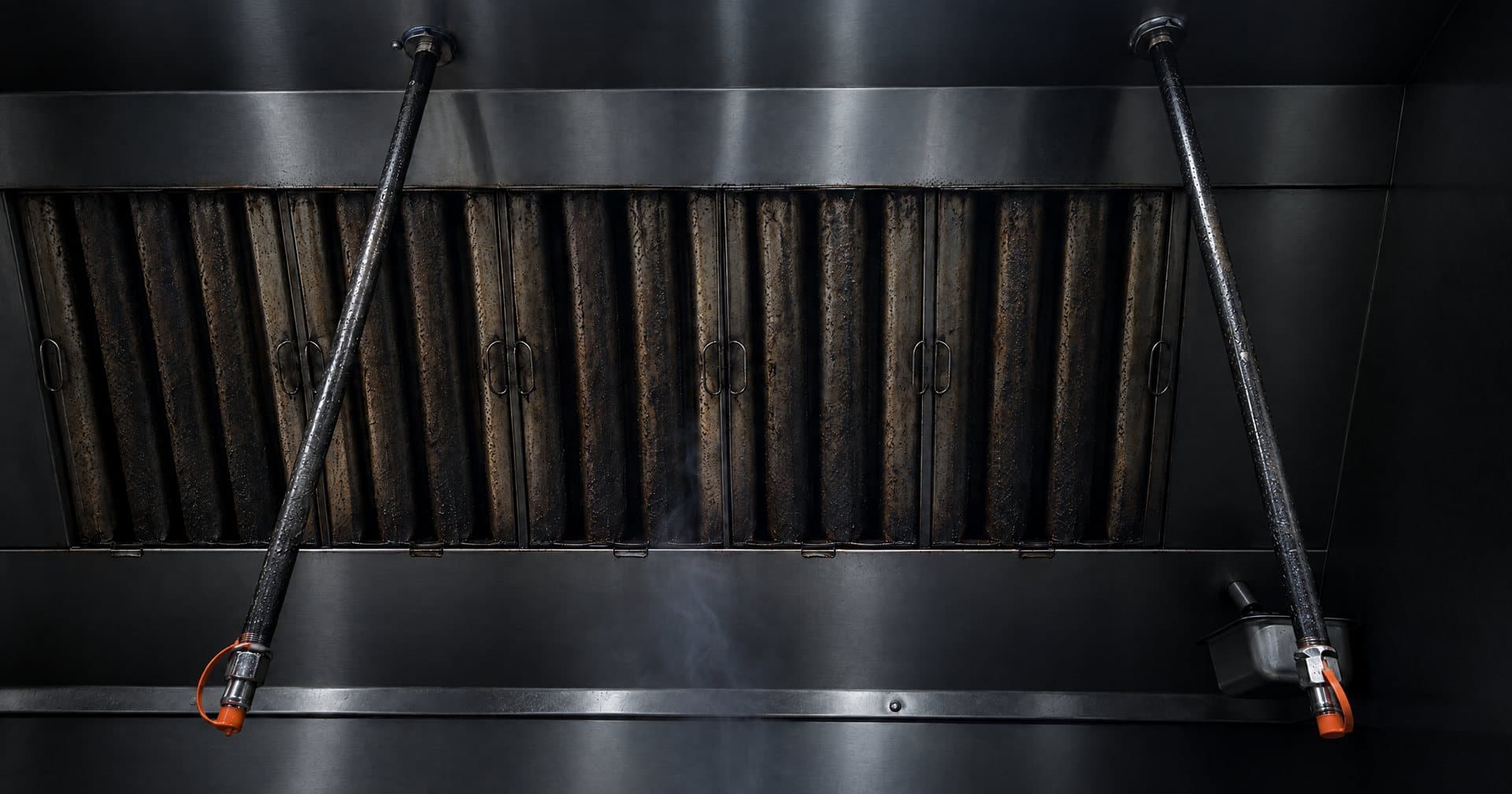
Your dining room is full. Every table is turned. The kitchen is running hot, the line is firing on all cylinders, and your team is in the kind of rhythm that only comes on the best nights. The exhaust hood overhead is humming the way it always does. Nobody is thinking about the 14 months of grease quietly accumulating inside the ductwork above their heads.
Then a pan flares.
What happens next will unfold in roughly twelve minutes. By the end, the fire department will be on scene, your dining room will be evacuated, and the business you spent years building will be facing a six-figure question: Could this have been prevented?
The answer, in nearly every case, is yes.
The Twelve Minutes That Change Everything
0:00 - The Ignition
A flare-up on the cooktop sends a burst of flame upward into the hood. Under normal conditions, this is routine. Commercial kitchens experience small flare-ups daily. But tonight, the grease-laden vapor residue coating the interior of the hood catches. A thin orange line of fire races along the underside of the hood filters.
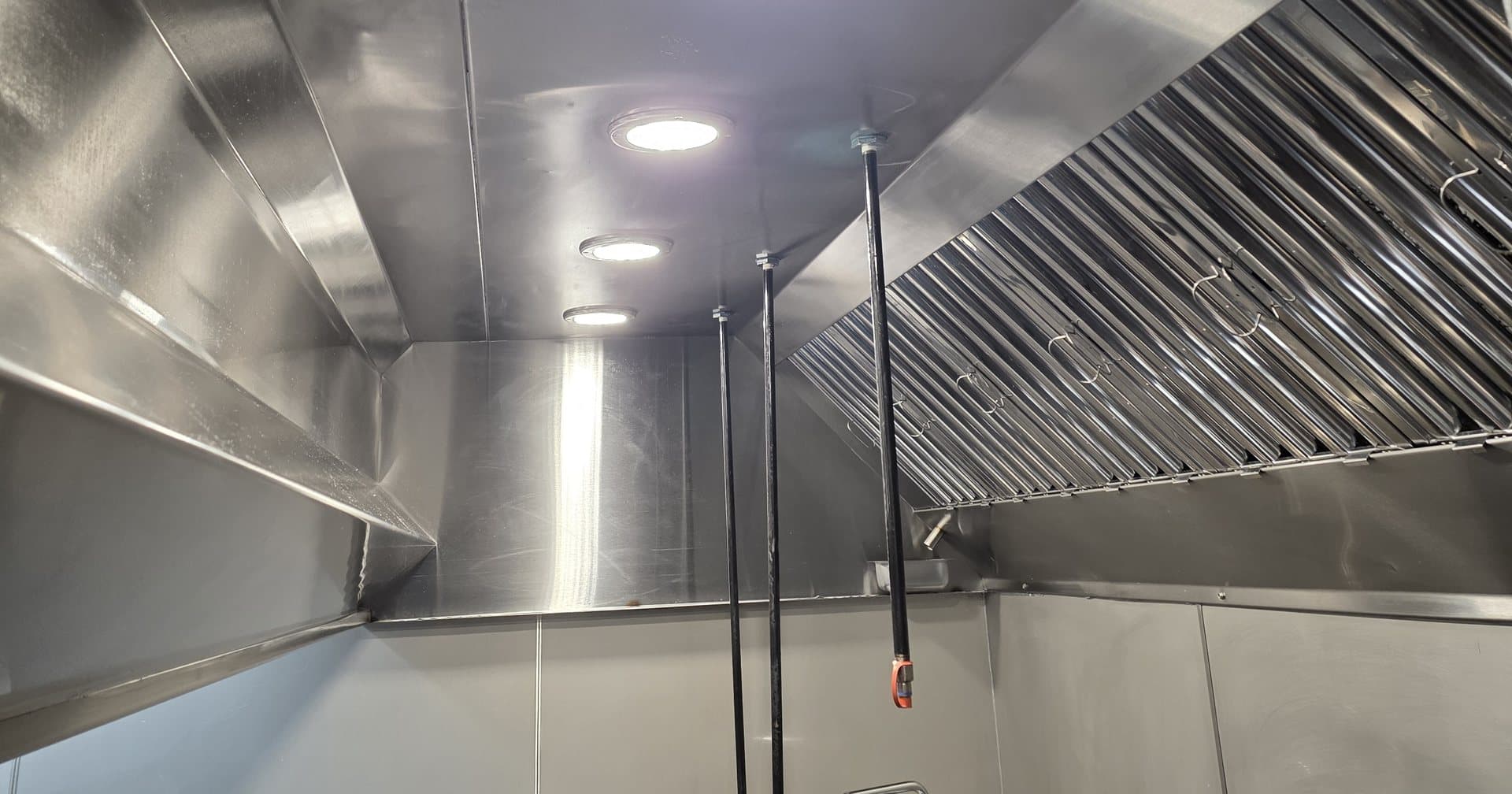
In a properly maintained system, this does not happen. Clean filters and hood surfaces have no fuel to ignite. The flare-up dies as quickly as it started. The cook doesn't even look up.
0:15 - The Climb
The fire enters the ductwork. Grease deposits inside the exhaust ducts act as an accelerant, and the fire begins traveling upward through the system. The exhaust fan is still running, actively pulling the fire through the duct like a chimney. Kitchen staff may not yet realize anything is wrong. The visible flame on the cooktop may have already died down.
1:00 - The First Signs
Smoke begins pushing back into the kitchen through the hood. The exhaust system is no longer ventilating properly because fire is consuming the airflow path. A cook notices the smoke, assumes it is from the grill, and keeps working. Thirty critical seconds pass.
2:00 - The Alarm
The fire suppression system activates, releasing wet chemical agent across the cooking surfaces and into the hood plenum. The kitchen goes quiet. Gas lines shut off automatically. The dining room hears the alarm. This is the moment that separates a close call from a catastrophe. If the suppression system is properly maintained and the fire is contained to the hood, the damage may be limited to cleanup and a lost evening of revenue.
But in too many cases, the suppression system has not been inspected in over a year. Nozzles are clogged. Agent pressure is low. Coverage is incomplete.
3:00 - The Escape
When suppression fails or only partially contains the fire, flames continue to travel through the ductwork toward the roof. The fire is now inside the walls and ceiling of the building, completely hidden from anyone in the kitchen. Temperatures inside the duct can exceed 2,000 degrees Fahrenheit.
5:00 - The Spread
Fire breaches the ductwork at a joint or seam weakened by years of grease saturation and heat cycling. It enters the ceiling cavity, where it finds insulation, electrical wiring, and structural framing. The fire is now a structure fire. The building's fire alarm system activates. Full evacuation begins.
8:00 - The Response
The fire department arrives. The kitchen is fully involved. Firefighters must now determine how far the fire has traveled through the building's concealed spaces. The dining room is being evacuated through emergency exits. Adjacent businesses may be affected.
12:00 - The Aftermath
The fire is brought under control. The kitchen is destroyed. The dining room has extensive smoke and water damage. The building may be structurally compromised. Your restaurant is closed indefinitely.
This Is Not Hypothetical
The National Fire Protection Association reports that U.S. fire departments respond to an average of 7,500 structure fires in eating and drinking establishments every year. These fires cause:
- $165 million in direct property damage annually
- An average of 75 civilian injuries per year
- 3 civilian deaths per year on average
- Thousands of jobs lost and businesses permanently closed
The leading cause? Cooking equipment, responsible for 61% of all restaurant fires. And the primary accelerant in the most destructive cases is grease buildup in exhaust systems that have not been properly cleaned.
In the DMV region specifically, fire marshals in Fairfax County, Prince George's County, Montgomery County, and Washington, DC report that the majority of commercial kitchen fires they respond to involve exhaust systems that were overdue for cleaning.
The Chain of Failure
Restaurant kitchen fires do not happen because of a single mistake. They happen because of a chain of small neglects that compound over time:
- A cleaning gets skipped. Business is busy, budgets are tight, and the exhaust system looks fine from the outside. One quarter becomes two. Two becomes four.
- Grease accumulates silently. You cannot see inside your ductwork. Grease vapor condenses on cooler duct surfaces, building up layer by layer. After 12 months without cleaning, a typical high-volume kitchen can have grease deposits exceeding a quarter-inch thick.
- Filters degrade. Baffle filters that are not cleaned daily or weekly lose their ability to capture grease particles. More grease enters the ductwork. The cycle accelerates.
- Suppression systems go unchecked. The fire suppression system above your cooking line is your last line of defense. But if the semi-annual inspection is skipped, you will not know that a nozzle is blocked, a fusible link is corroded, or the agent tank pressure has dropped below operational levels.
- The fire finds fuel. A routine cooking flare-up, the kind that happens every day in every commercial kitchen, encounters a system loaded with fuel. The result is not a flare-up. It is an uncontrolled fire.
Five Warning Signs Your System Is at Risk Right Now
You do not need to wait for an inspection to identify danger. Walk into your kitchen tonight and look for these five red flags:
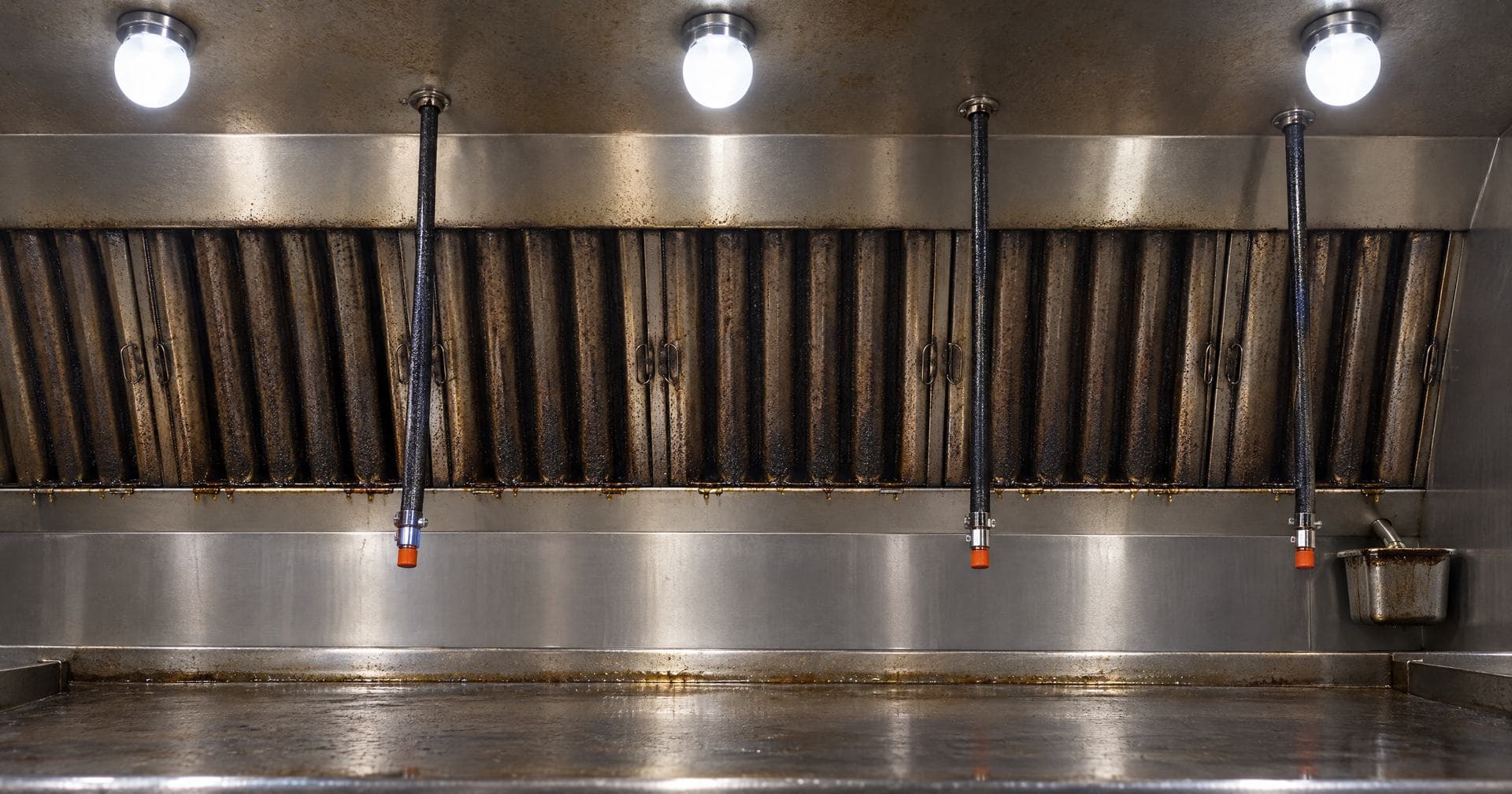
- Visible grease on hood surfaces. If you can see grease accumulation on the exterior of your hood or along the edges of your filters, the interior of the system is significantly worse. The surfaces you can see are the tip of the iceberg.
- Grease dripping from filters or ductwork. Active dripping means the system is saturated. This is not a maintenance issue. This is an emergency. Dripping grease can ignite on cooking surfaces below.
- Reduced airflow or excessive heat in the kitchen. If your kitchen is hotter than usual, or if smoke lingers instead of being pulled up into the hood, your exhaust system is restricted. Grease buildup is the most common cause.
- No recent cleaning documentation. Check your records right now. If you cannot produce a cleaning certificate with a date within the last 90 days (for high-volume operations) or 180 days (for moderate-volume), you are out of compliance and at elevated risk.
- Unfamiliar or missing suppression system tags. Your fire suppression system should have a current inspection tag from a licensed contractor. If the tag is missing, expired, or from a company you do not recognize, your system may not function when you need it most.
The Real Cost of "Saving Money"
The most common reason restaurant owners defer exhaust system cleaning is cost. Professional hood cleaning for a typical commercial kitchen in the DMV area runs between $400 and $800 per service, depending on system size and complexity. Quarterly cleaning costs roughly $1,600 to $3,200 per year.
Now consider the cost of a single kitchen fire:
- Fire damage repair: $50,000 to $500,000+, depending on severity and spread
- Equipment replacement: $75,000 to $250,000 for a full commercial kitchen refit
- Lost revenue during closure: Average of 3 to 9 months for fire-damaged restaurants, at $30,000 to $150,000+ per month in lost sales
- Insurance premium increases: 30% to 200% increases are common after a fire claim, if coverage is renewed at all
- Insurance claim denial: Policies routinely deny claims when the insured failed to maintain fire safety systems. A denied claim turns a $200,000 loss into a business-ending event
- Health department and fire marshal fines: $500 to $10,000 per violation
- Legal liability: If employees or customers are injured, personal injury lawsuits can reach seven figures
- Reputation damage: A fire makes local news. In the age of social media, it stays visible indefinitely
The math is not complicated. A $3,200 annual investment in proper exhaust system maintenance protects against six- and seven-figure losses. There is no business decision in your restaurant with a better return on investment.
The Prevention Protocol
Protecting your restaurant requires a systematic approach, not a once-a-year effort. Here is the professional-grade prevention framework used by the safest commercial kitchens in the DMV:
Daily (Kitchen Staff)
- Clean hood filters at the end of every shift or run them through the dishwasher
- Wipe down accessible hood surfaces to remove surface grease
- Verify that the fire suppression system indicator light or gauge shows normal status
- Report any unusual smoke behavior, grease dripping, or reduced airflow to management immediately
Monthly (Management)
- Inspect visible ductwork and hood interior with a flashlight for grease accumulation
- Check fire suppression system pressure gauges and inspection tags
- Verify that all hood filters are intact, properly seated, and not warped
- Review and update your cleaning schedule based on any changes in cooking volume or methods
Quarterly to Semi-Annually (Professional Service)
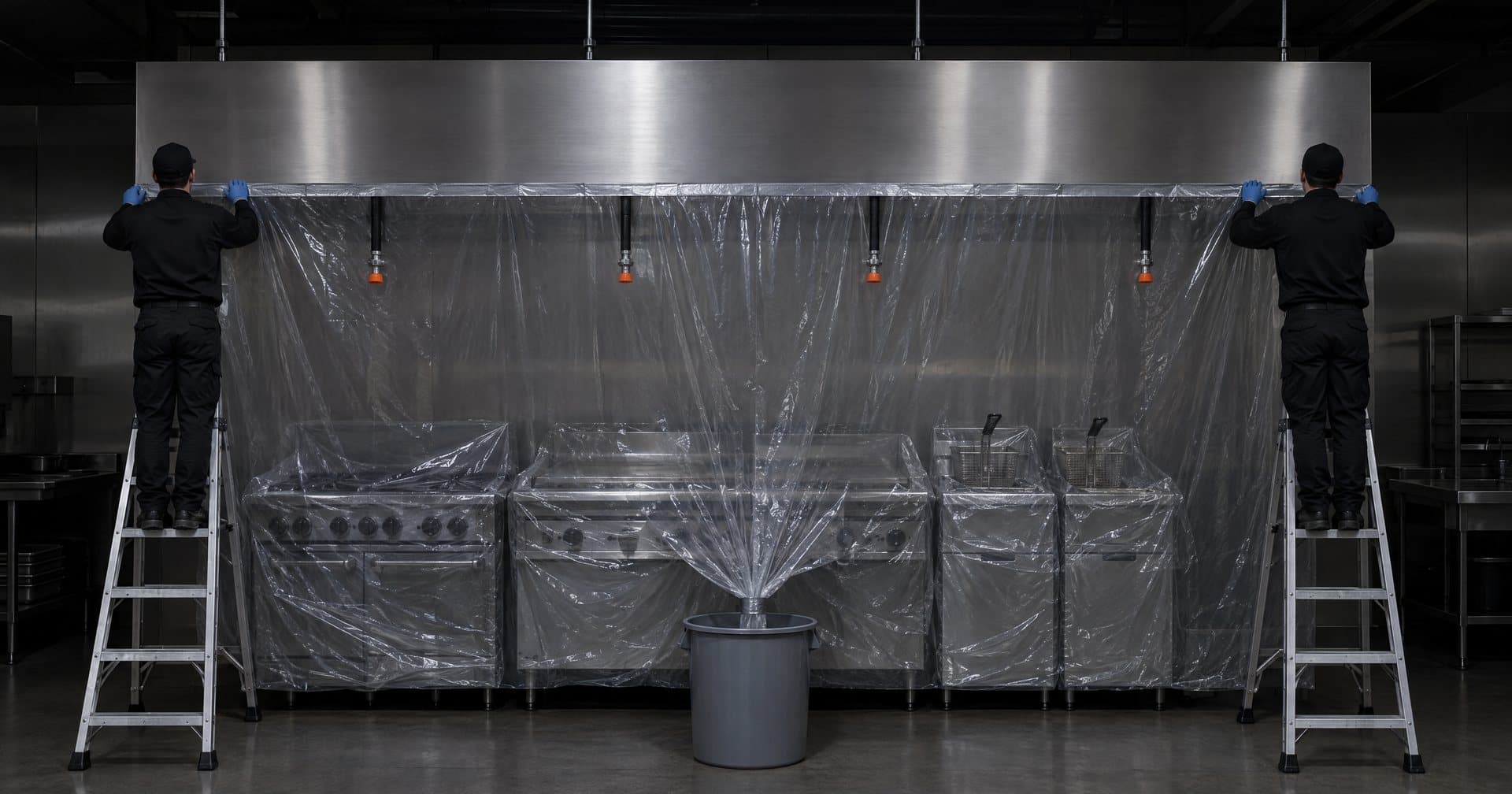
- Full exhaust system cleaning by NFPA-96 certified technicians, from hood to rooftop fan
- Documented inspection with before-and-after photos
- Cleaning certificate filed for insurance and fire marshal records
- Written report of any deficiencies, damage, or areas of concern
Semi-Annually (Professional Service)
- Fire suppression system inspection and testing by a licensed contractor
- Fusible link inspection and replacement as needed
- Agent tank pressure verification and recharge if required
- Nozzle cleaning and alignment check
What to Do Right Now
If you have read this far, you already know whether your restaurant is protected or exposed. If there is any doubt, take these three steps today:
- Pull your cleaning records. If your last professional exhaust system cleaning was more than six months ago, schedule one immediately.
- Check your suppression system. Walk to your cooking line and look at the inspection tag on your fire suppression system. If it is expired or missing, call your service provider today.
- Schedule a professional assessment. A certified technician can evaluate your entire system in under an hour and tell you exactly where you stand.
Protect Your Restaurant. Protect Your People.
Qwick Services and Solutions provides comprehensive commercial kitchen exhaust cleaning and fire safety services throughout Virginia, Washington DC, and Maryland. Our NFPA-96 certified technicians deliver thorough cleanings with full documentation, giving you the protection and peace of mind your business deserves.
We offer free exhaust system assessments for restaurants across the DMV. Our team will evaluate your system, identify any risks, and provide a clear maintenance plan tailored to your operation.
The twelve minutes described in this article do not have to be your story. The restaurants that never make the news are the ones that made prevention a priority.
Contact Qwick Services today. Because the best fire is the one that never starts.