It's Saturday Night. Your Kitchen Just Went Down.
The dining room is packed. Tickets are flying. Your line cooks are in the zone. And then it happens: the exhaust hood shuts off, a fire suppression system discharges, the drains back up across the floor, or worse—you smell smoke where there shouldn't be smoke. In an instant, your Saturday night revenue turns into a full-blown crisis.
What you do in the next 60 minutes will determine whether you're closed for a night or closed for a week.
We've seen it hundreds of times across Virginia, DC, and Maryland. The restaurant owners who recover fastest aren't the ones with the most money or the biggest kitchens—they're the ones who had a plan. This is that plan. Print it out. Tape it to the office wall. Share it with every manager on your team.
Minutes 0–5: Stop, Secure, and Assess
The first five minutes are about one thing: safety. Whatever just happened, your instinct will be to fix it and keep cooking. Fight that instinct. Here's what to do instead:
- Turn off all cooking equipment immediately. Every burner, every fryer, every oven. If your exhaust system has failed, continuing to cook creates a carbon monoxide hazard and dramatically increases fire risk. No exceptions.
- Evacuate the kitchen if there's any sign of fire, smoke, or chemical discharge. Fire suppression systems discharge wet chemical agents that are hazardous to breathe. Get your people out. Customers stay in the dining room unless there's an active fire—then follow your full evacuation plan.
- Call 911 if there is any active fire, visible smoke, or if the fire suppression system has discharged. Don't try to be a hero. Even if the fire appears out, the fire department needs to confirm the scene is safe. In DC, Virginia, and Maryland, a fire suppression discharge is a mandatory fire department response.
- Shut off the gas supply to the kitchen. Every manager should know where the emergency gas shutoff valve is located. If you don't know where it is right now, stop reading and go find it today.
- Account for all staff. Do a headcount. Make sure nobody is still in a walk-in, a storage room, or anywhere near the affected area.
What NOT to Do in the First 5 Minutes
- Do not attempt to restart the exhaust system without understanding why it failed
- Do not try to clean up fire suppression chemical yourself—it requires professional decontamination
- Do not re-enter a smoke-filled kitchen without firefighter clearance
- Do not resume cooking under any circumstances until the root cause is identified
Minutes 5–15: Identify the Emergency Type
Once everyone is safe, you need to figure out exactly what you're dealing with. The response from here depends on which of the four major kitchen emergencies you're facing.
Scenario 1: Exhaust System Failure
Signs: Hood fans stop running, you notice heat and steam building up rapidly, grease odors intensify, the kitchen temperature spikes.
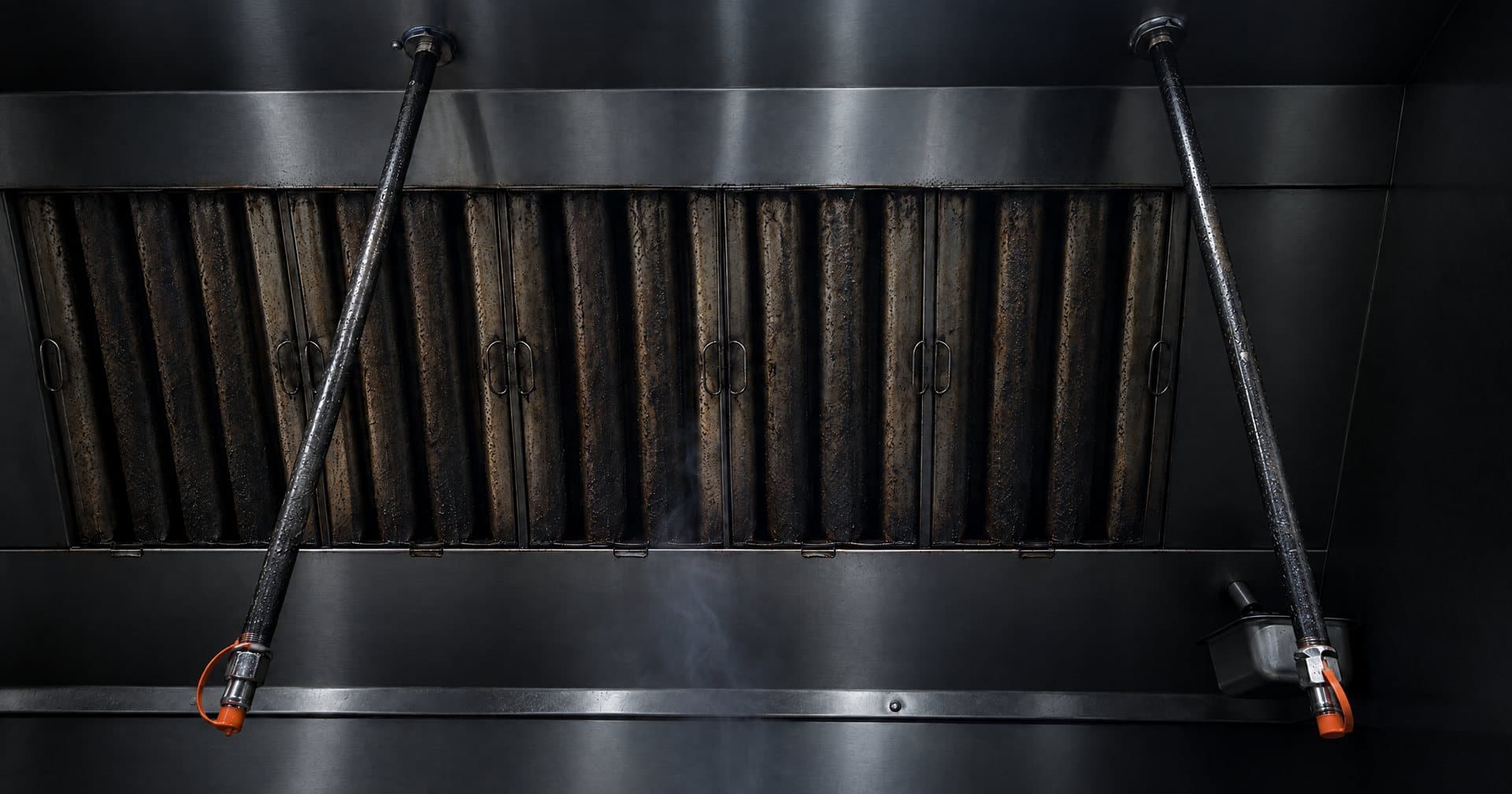
An exhaust failure is serious but manageable if you act fast. Without ventilation, grease-laden vapors accumulate in the hood and ductwork, creating an immediate fire hazard. Carbon monoxide from gas appliances has nowhere to go.
Immediate steps:
- Confirm all cooking has stopped (you should have done this already)
- Check the electrical panel—a tripped breaker is the most common cause
- Check the rooftop fan unit if safely accessible. Belt-driven fans frequently fail when the belt breaks
- Open exterior doors to create cross-ventilation while the system is down
- Do NOT reset breakers more than once—repeated tripping indicates an electrical fault
Scenario 2: Grease Fire Aftermath
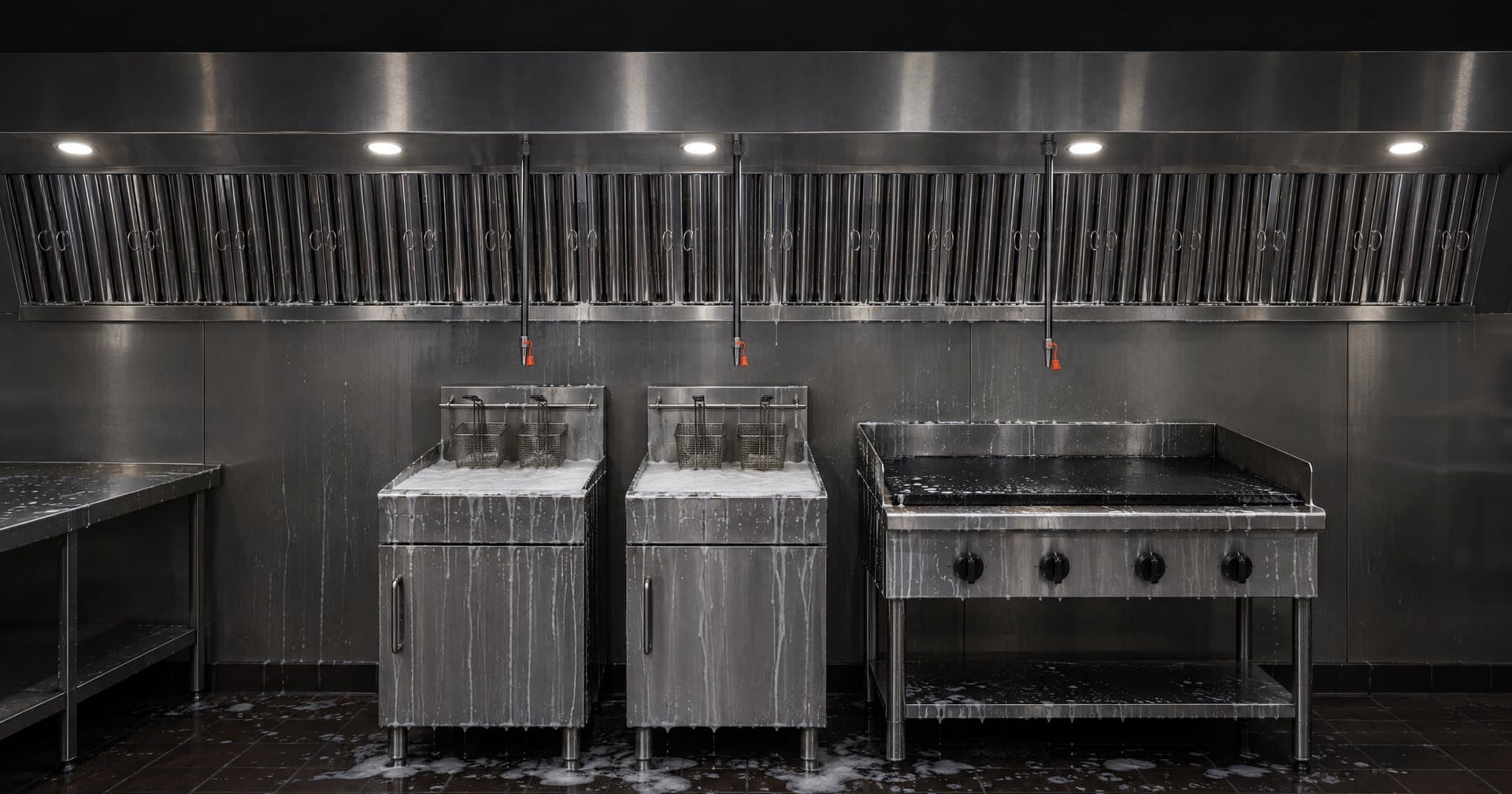
Signs: Fire suppression system has discharged, there's white or yellowish chemical residue on equipment, the fire is out but the kitchen is a mess.
If the fire suppression system did its job and the fire department has cleared the scene, you're now looking at a significant cleanup and re-certification process. Here's the reality: you cannot reopen until the fire suppression system is recharged and inspected by a licensed contractor.
Immediate steps:
- Do not touch or attempt to clean the fire suppression chemical—it's corrosive and requires specific handling procedures
- Document everything with photos and video before anything is moved or cleaned
- Contact your insurance company. Most commercial kitchen policies have specific reporting windows (often 24-48 hours) for fire-related claims
- Call a certified fire suppression contractor to schedule system recharge and inspection
- Call a professional kitchen cleaning company for post-fire decontamination
Scenario 3: Drain Backup
Signs: Water pooling on the kitchen floor, sewage odors, drains gurgling or flowing in reverse, standing water around floor sinks.
A drain backup during service is a health code violation in progress. Standing water in a commercial kitchen is a slip hazard, a contamination risk, and a guaranteed failed health inspection if an inspector walks through the door.
Immediate steps:
- Stop using all sinks and water-generating equipment (dishwashers, steamers, ice machines draining to the affected line)
- Prevent any wastewater from contacting food, food prep surfaces, or clean equipment
- If sewage is backing up, this is a mandatory kitchen closure in every DMV jurisdiction. You cannot serve food with sewage present in the kitchen
- Use wet-dry vacuums to contain standing water if available—do not mop sewage with your kitchen mop
- Call a commercial plumber who handles grease trap and main line blockages
Scenario 4: Fire Suppression Discharge (No Fire)
Signs: Fire suppression system activates without an actual fire, chemical agent covers equipment and cooking surfaces, gas supply automatically shuts off.
False discharges happen more often than you'd think—usually caused by a loose fusible link, accidental contact with a nozzle, or system malfunction. The damage is the same: your entire cooking line is contaminated with wet chemical, and the suppression system is now empty and non-functional.
Immediate steps:
- Call the fire department—even for a false discharge, this is required in DC, Virginia, and Maryland
- Do NOT attempt to clean the chemical yourself or rinse it down your drains (it can damage plumbing and violates wastewater regulations)
- All food that was exposed to the chemical agent must be discarded. No exceptions
- The system must be professionally recharged before you can resume cooking
Minutes 15–30: Document Everything
This is the step that most restaurant owners skip in the chaos—and it's the step that costs them the most money later. Documentation protects you with insurance, with the health department, and with the fire marshal.
What to Document Right Now
- Photos and video. Walk through the affected area and record everything. Capture the equipment, the damage, the chemical residue, the standing water—whatever the situation is. Timestamp matters, so use your phone camera which automatically records date and time.
- Written timeline. Open the notes app on your phone and write down exactly what happened, when it happened, and what you did in response. Include names of staff who were present. You'll forget details by tomorrow—write it down now.
- Witness statements. If a cook saw the fire start, if a dishwasher noticed the drains backing up first, get their account while it's fresh.
- Equipment serial numbers and model information for anything that failed or was damaged.
- Your most recent hood cleaning certificate and fire suppression inspection report. You should have these on file—your insurance company and fire marshal will ask for them.
Pro tip: Create a shared folder on your phone or cloud drive right now called "Kitchen Emergency Docs." When a crisis hits, you'll know exactly where to save everything.
Minutes 30–45: Make the Critical Calls
By now, the fire department has come and gone (if applicable), everyone is safe, and you've documented the scene. It's time to get the recovery process moving.
Call 1: Your Emergency Kitchen Maintenance Provider
This is the most important call you'll make. You need a company that can respond tonight—not Monday morning. A qualified emergency kitchen service provider will:
- Assess the damage and give you an honest timeline to reopen
- Handle post-fire cleaning and chemical decontamination
- Repair or replace failed exhaust components
- Coordinate fire suppression system recharge
- Help you navigate the compliance and re-certification process
Qwick Services and Solutions is available 24/7 with a 2-4 hour response time across the entire DMV area. Call us at (202) 643-8113. We handle exhaust system failures, post-fire cleaning, fire suppression coordination, and everything it takes to get your kitchen back to code and back to business.
Call 2: Your Insurance Company
Report the incident as soon as possible. Most commercial kitchen insurance policies require notification within 24-48 hours for fire, equipment failure, or water damage claims. Have your policy number ready. The documentation you gathered in the previous step will be invaluable here.
Call 3: The Fire Marshal (If Applicable)
In the DMV area, here are the key contacts:
- Washington, DC: DC Fire and EMS Department, Fire Prevention Division — (202) 727-1600
- Fairfax County, VA: Fire Marshal's Office — (703) 246-4800
- Prince William County, VA: Fire Marshal's Office — (703) 792-6360
- Montgomery County, MD: Fire Marshal's Office — (240) 777-2600
- Prince George's County, MD: Fire/EMS Department — (301) 583-2200
- Arlington County, VA: Fire Marshal's Office — (703) 228-4644
If there was a fire or fire suppression discharge, the fire marshal will need to inspect and approve your kitchen before you can reopen. Getting this scheduled early means reopening sooner.
Call 4: Your Local Health Department (If Applicable)
For drain backups involving sewage, or any situation where food contamination may have occurred, proactively notifying your health department demonstrates good faith and can prevent worse outcomes during your next inspection.
- DC Health — Health Regulation and Licensing: (202) 442-5955
- Virginia Department of Health: Contact your local health district office
- Maryland Department of Health: Contact your county environmental health office
Minutes 45–60: Plan Your Recovery
The adrenaline is starting to wear off. You've handled the crisis. Now it's time to think about getting your kitchen back online. Here's what to focus on in the final stretch of your first hour.
Assess the Financial Impact
Be honest with yourself about what this will cost. Factor in:
- Lost revenue for every hour/day you're closed
- Repair and replacement costs for damaged equipment
- Professional cleaning costs for decontamination
- Fire suppression recharge ($500-$2,000+ depending on system size)
- Re-inspection fees if applicable
- Food loss from contamination or spoilage
Communicate with Your Team
Your staff is rattled. They want to know if they're working tomorrow. Be transparent: tell them what happened, what's being done about it, and give them a realistic timeline. If you're going to be closed for more than a day, communicate that clearly so they can plan. Good people don't stick around when they're left in the dark.
Notify Your Customers
If you have reservations, catering orders, or events booked, start making those calls now. Post a brief, professional update on your social media and Google Business Profile. You don't need to share every detail—a simple "we're experiencing a temporary kitchen issue and will reopen as soon as possible" is enough. Customers respect honesty.
Understand What's Required to Reopen
Depending on the emergency, you may need some or all of the following before you can legally resume cooking operations:
- Exhaust system repair and verification — The system must be fully operational and moving air at the required CFM (cubic feet per minute) rate
- Fire suppression system recharge and inspection — A licensed contractor must recharge the system, replace any discharged nozzles, and provide a new certification tag
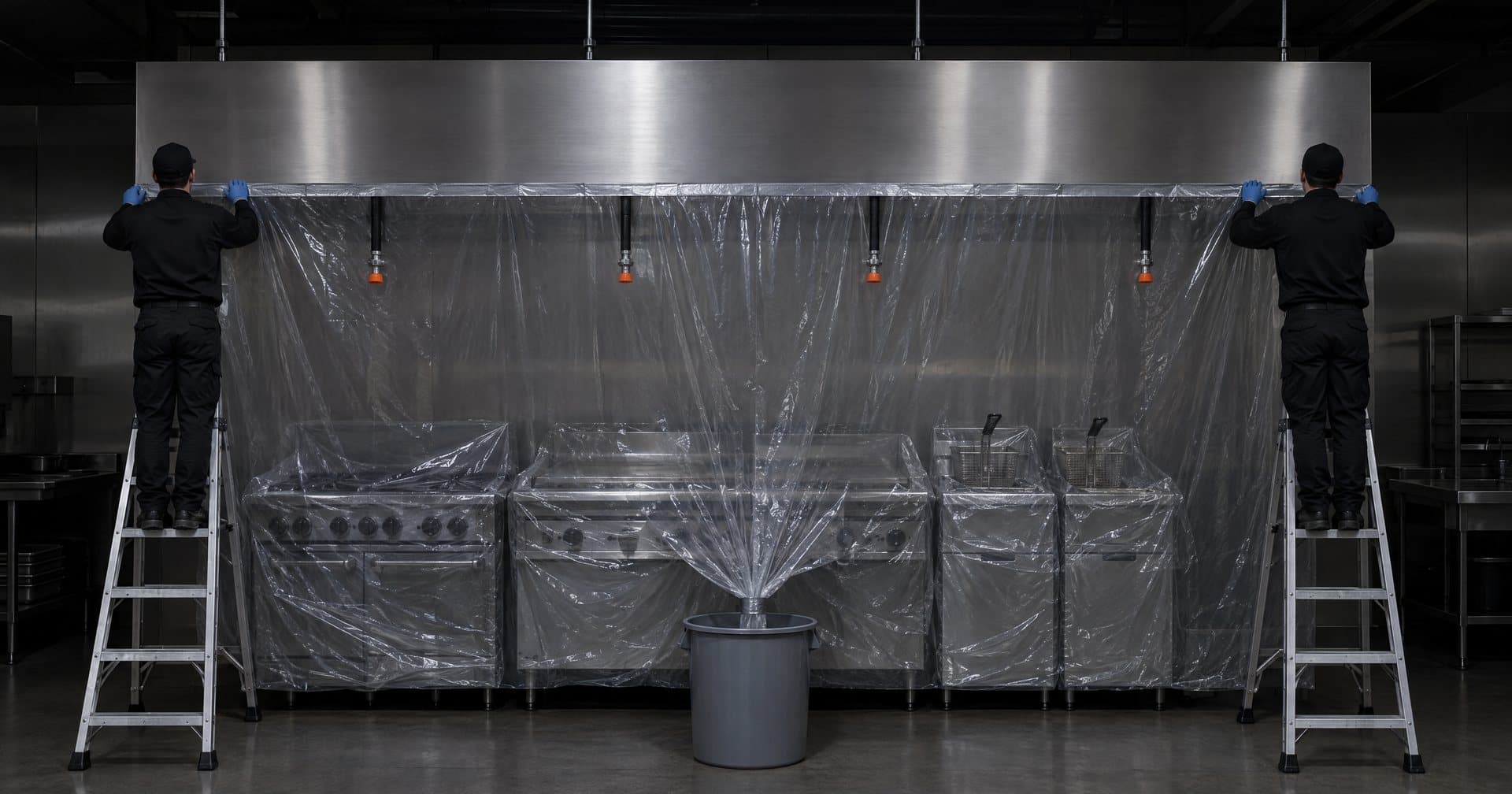
- Post-fire professional cleaning — All surfaces, equipment, and ductwork contaminated by fire, smoke, or chemical agent must be professionally cleaned
- Fire marshal sign-off — Required after any fire or fire suppression discharge in DC, Virginia, and Maryland
- Health department clearance — Required after sewage backups or any food contamination event
- Equipment certification — Any equipment damaged by fire, water, or chemical exposure must be assessed and certified safe before use
After the First Hour: Getting Back to Code Compliance
The first 60 minutes are about crisis management. The next 24-72 hours are about compliance restoration. This is where having the right partner makes all the difference.
A qualified commercial kitchen maintenance company won't just fix what broke—they'll make sure your entire system is brought back to NFPA-96 code compliance. That means:
- Complete exhaust system inspection and cleaning
- Fire suppression system coordination with licensed contractors
- Documentation that satisfies your insurance company, fire marshal, and health department
- Compliance certificates you can present during inspections
- A maintenance plan to prevent the next emergency
The restaurants that bounce back fastest are the ones that treat the emergency as a system-wide reset. Don't just fix the one thing that failed—use the downtime to get your entire kitchen exhaust and fire safety system up to standard.
Prevention: Your Best Emergency Plan Is Avoiding One
We'd rather get a maintenance call from you than an emergency call. Here are the top things you can do right now to reduce your risk:
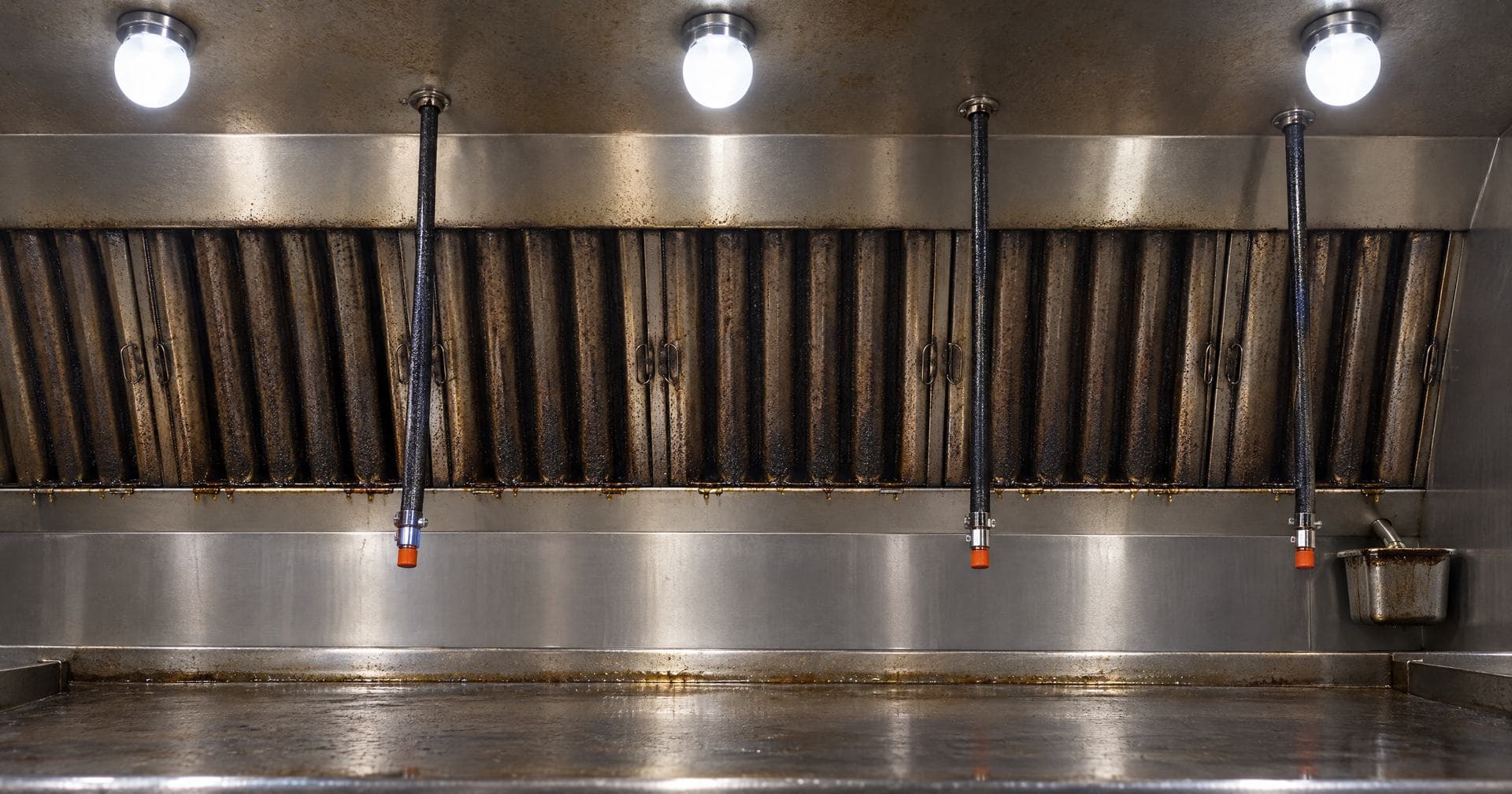
- Schedule regular hood cleaning on the NFPA-96 required frequency (monthly, quarterly, or semi-annually based on your cooking volume)
- Inspect your fire suppression system every six months through a licensed contractor
- Clean grease traps on schedule—a backed-up grease trap is the number one cause of kitchen drain emergencies
- Test exhaust fans monthly and listen for bearing noise, belt slippage, or reduced airflow
- Train every manager on emergency shutoff locations (gas, electrical, fire suppression manual pull)
- Post emergency contact numbers in the kitchen office—fire department, your maintenance provider, your insurance company, and the fire marshal
- Keep your compliance certificates current and accessible. When the fire marshal shows up—and they will—you want to hand them a clean file, not scramble through a junk drawer
Don't Wait for Saturday Night to Find Out You're Not Ready
Kitchen emergencies don't happen on your schedule. They happen on the busiest night of the week, during the holiday rush, or thirty minutes before a health inspection. The difference between a one-night closure and a one-week closure comes down to preparation and who you call.
Qwick Services and Solutions provides 24/7 emergency commercial kitchen services across Virginia, Washington DC, and Maryland. When your kitchen goes down, we respond in 2-4 hours—not days. We handle exhaust system failures, post-fire cleaning and decontamination, fire suppression coordination, drain emergencies, equipment assessment, and full compliance restoration.
One call. We show up. You get back to business.
24/7 Emergency Line: (202) 643-8113
Save this number in your phone right now. You'll be glad you did when the Saturday night rush turns into a Saturday night crisis.