Drive Route 50 through Fairfax County on any given evening and count the restaurant signs. Not the sit-down steakhouses or the national chains with corporate maintenance contracts — those take care of themselves. Count the others. The pho restaurants in the Greenbriar shopping center. The Korean barbecue places along Route 7. The Salvadoran pupuserias in Baileys Crossroads. The Indian restaurants clustered along Fairfax Boulevard. The pizza shops, the taco joints, the Thai places, the Chinese takeout operations that turn over a hundred orders between five and nine on a Wednesday.
Fairfax County has one of the densest concentrations of independent restaurant operations in the entire Washington metropolitan area, and the overwhelming majority of them are operating out of strip mall spaces that were designed for retail — not for the thermal and grease loads of commercial cooking.
The Strip Mall Kitchen
A strip mall restaurant space in Fairfax County typically starts life as a general commercial unit — maybe it was a dry cleaner, a nail salon, or a small office. When a restaurant tenant moves in, the space gets retrofitted: a hood is installed over the cooking line, ductwork is run through the ceiling plenum or up an exterior wall to a rooftop exhaust fan, and the kitchen goes live. The landlord signs off. The health department inspects the food handling surfaces. The fire marshal checks for suppression system compliance. And then, in most cases, nobody looks at the exhaust system again until something goes wrong.
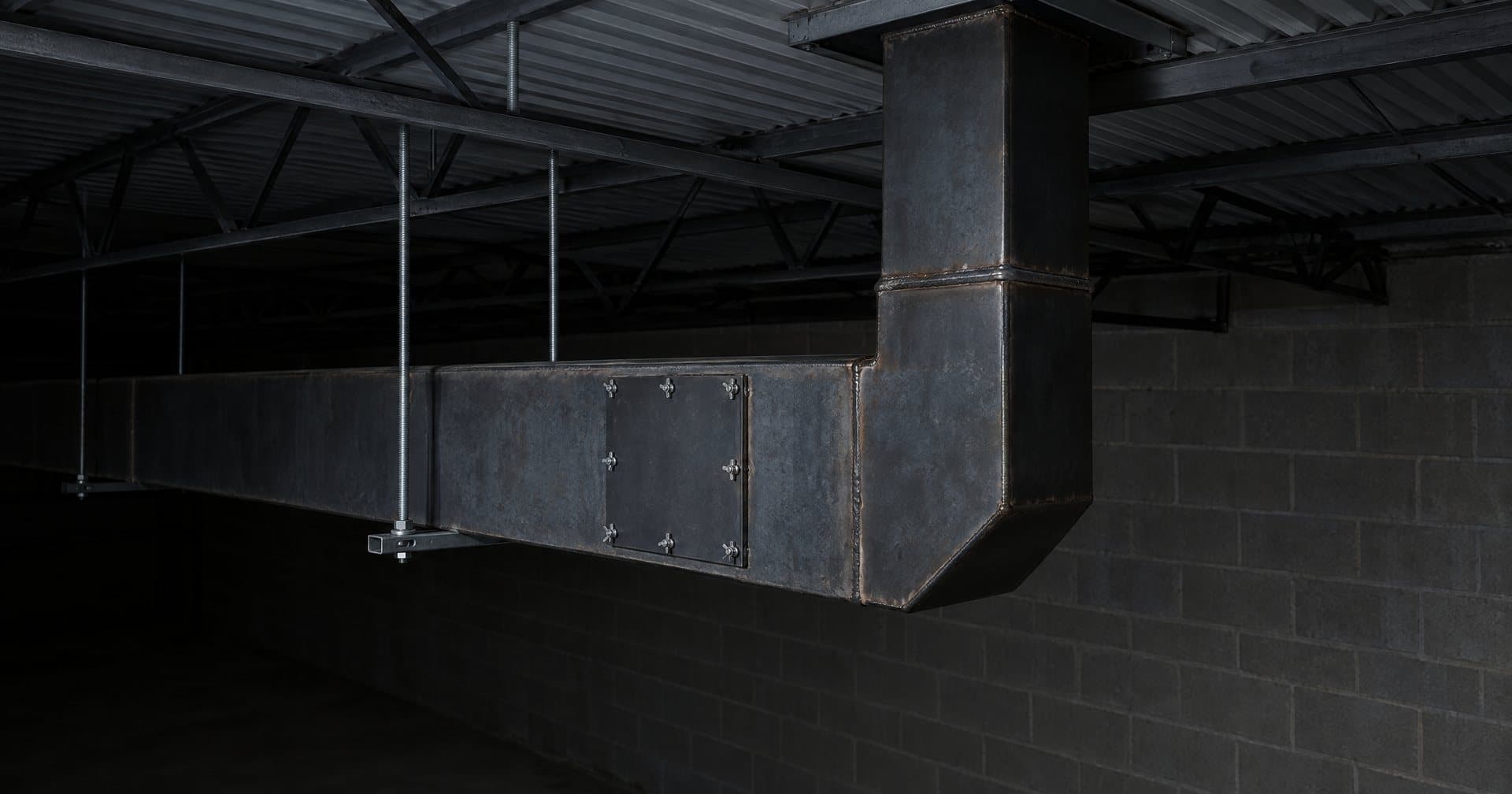
The problem with retrofit ductwork in strip mall spaces is geometry. These are not buildings designed with kitchen exhaust in mind. The ceiling heights are low, which means horizontal duct runs are common — sometimes running thirty or forty feet across a ceiling plenum before making the vertical turn to the roof. Every foot of horizontal run is a foot where grease settles and accumulates. In a purpose-built restaurant, the duct runs vertically from the hood through the roof with minimal horizontal travel. In a strip mall conversion, the duct may run horizontally across the entire depth of the unit before finding a path to the rooftop.
That horizontal run is where fires start.
Virginia Fire Code and What It Requires
Virginia adopts the International Fire Code with state-specific amendments, and Fairfax County enforces it through the Fairfax County Fire Marshal''s Office. The code incorporates NFPA 96 by reference, which means every commercial cooking operation in Fairfax County — from the high-volume Korean barbecue restaurant to the small sandwich shop with a single flat-top grill — is subject to the same ventilation maintenance requirements.
The requirements are not ambiguous. NFPA 96 mandates that exhaust systems serving cooking operations that produce grease-laden vapors be inspected and cleaned at intervals based on the type and volume of cooking:
- Monthly — systems serving solid fuel cooking, high-volume charbroiling, or wok cooking
- Quarterly — systems serving moderate-volume cooking operations (most full-service restaurants)
- Semi-annually — systems serving low-volume cooking operations (churches, seasonal businesses, day camps)
- Annually — systems serving low-volume operations that do not produce significant grease-laden vapors
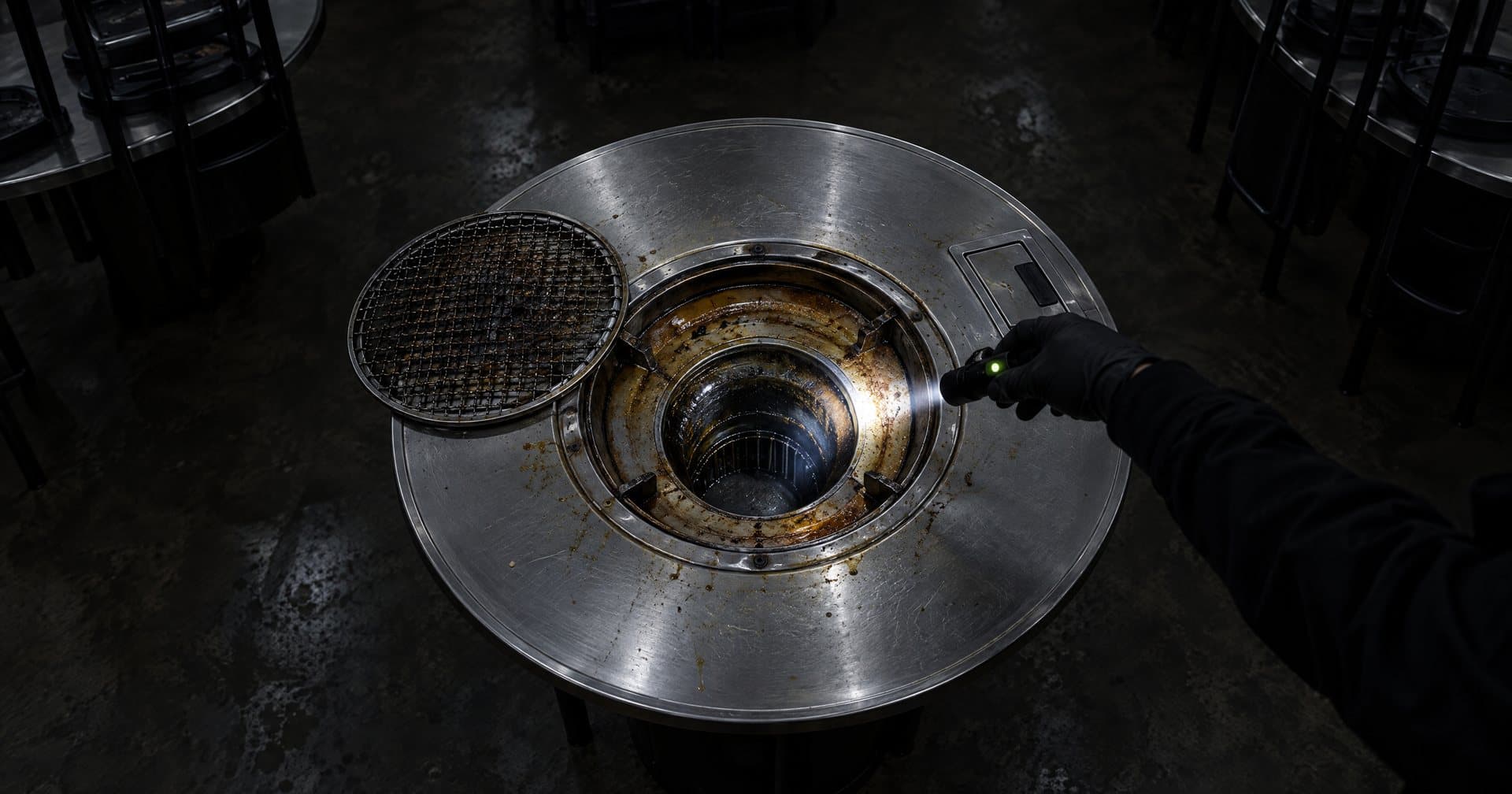
The majority of independent restaurant operations in Fairfax County fall into the quarterly or monthly category. The majority of those operations are not meeting that schedule. This is not a guess — it is the consistent finding of fire inspectors across the county who report that deferred exhaust system maintenance is one of the most common violations in commercial kitchen inspections.
The Language Barrier Nobody Talks About
Fairfax County''s restaurant landscape is one of the most internationally diverse in the country. The operators running kitchens along Route 7, in the Annandale corridor, in Centreville, and throughout the county represent dozens of nationalities and language backgrounds. Many are first-generation business owners who navigated the permit process, secured financing, built out their kitchens, and opened their doors through sheer determination and the help of community networks.
What those community networks do not always include is guidance on NFPA 96 compliance. The fire code is published in English. Inspection reports are issued in English. The hood cleaning industry in Northern Virginia operates predominantly in English. An operator whose primary language is Korean, Vietnamese, or Spanish may understand perfectly well that the kitchen needs to be clean — and may keep the visible kitchen immaculate — without ever receiving clear communication that the duct system above the ceiling, the fan on the roof, and the grease containment system all require professional service at mandated intervals.
This is not a compliance failure born of negligence. It is a communication failure that the industry has not adequately addressed. A hood cleaning service that operates in Fairfax County without the ability to communicate across language barriers is a service that is missing a significant portion of the kitchens that need it most.
Multi-Tenant Fire Risk
Strip malls are shared structures. A grease fire in one tenant space does not politely contain itself within the unit''s lease lines. Fire travels through shared ceiling plenums, through party walls that may or may not have been properly fire-stopped during the restaurant buildout, and across rooftops where multiple exhaust fans and HVAC units sit in close proximity.
A single kitchen fire in a Fairfax County strip mall can damage or destroy multiple businesses. The insurance implications cascade: the restaurant''s carrier, the landlord''s carrier, and the neighboring tenants'' carriers all become involved in a claims process that can take years to resolve. The restaurant that caused the fire — if it cannot demonstrate NFPA 96 compliance — may find itself on the wrong end of a subrogation claim from every other affected party.
The landlord''s liability is not hypothetical either. Property owners who lease to restaurant tenants without requiring proof of exhaust system maintenance are carrying risk they may not have priced into their insurance coverage. A landlord who can demonstrate that lease terms required NFPA 96 compliance and that documentation was collected quarterly is in a materially different legal position than one who never asked.
What Proper Maintenance Covers
For a Fairfax County strip mall restaurant, compliant exhaust system maintenance includes:
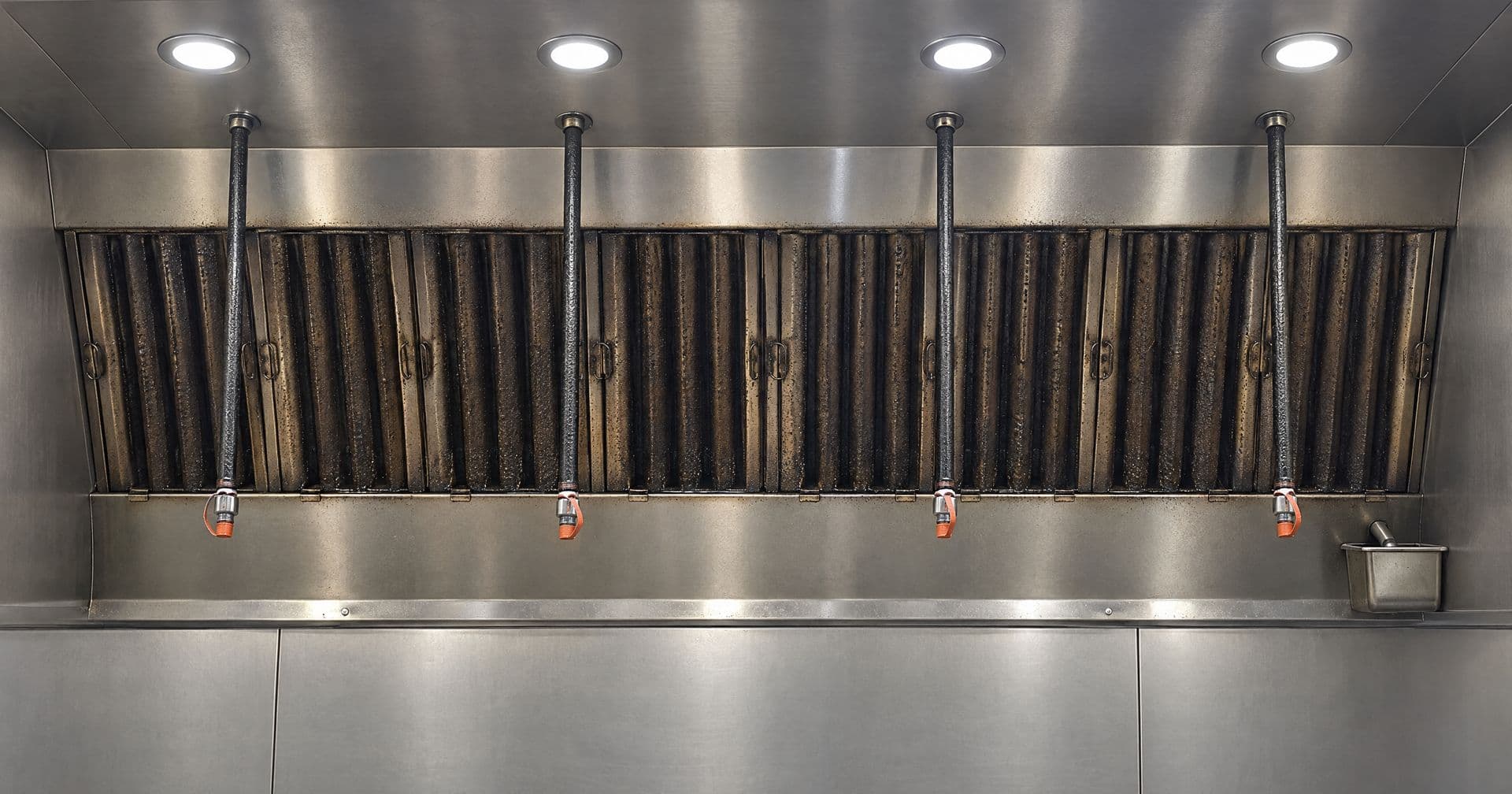
- Hood and filter service — complete degreasing and inspection of the hood interior, baffle filters, and any grease gutters or collection cups
- Full duct cleaning — including every horizontal run, every elbow, and every access panel from the hood to the rooftop termination
- Exhaust fan service — blade cleaning, housing degreasing, belt inspection, and hinge kit operation to verify the fan can be tilted for proper cleaning access
- Grease containment — rooftop grease cups emptied, containment pads inspected, and any runoff pathways cleared
- Documentation — before-and-after photographs, a signed certificate of service, and a written report that can be produced at inspection
The Cost of Doing Nothing
A professional hood cleaning for a typical strip mall restaurant in Fairfax County runs between three hundred and eight hundred dollars depending on system size and condition. A grease fire in the same restaurant will generate direct damage costs starting at fifty thousand dollars and escalating rapidly if the fire spreads to adjacent units. The business interruption alone — weeks or months of closure during reconstruction — often exceeds the total cost of a decade of quarterly cleaning service.
The math does not require a calculator. It requires someone to make the call and schedule the work. For the hundreds of independent restaurant operators in Fairfax County who are cooking hard every day in strip mall kitchens that were never designed for what they are doing, that call is overdue.