Arlington County occupies twenty-six square miles between the Potomac River and Fairfax County, and it has managed to pack more restaurants into that footprint than counties three times its size. The density is not accidental. Arlington bet on urban-style development decades before most of suburban Virginia, building transit-oriented corridors along the Rosslyn-Ballston Metro line and more recently along Columbia Pike. The result is a county where you can walk from a Michelin-recognized restaurant to a Salvadoran pupuseria to a Vietnamese pho house to a craft brewery taproom without ever getting in a car.
That density is what makes Arlington work. It is also what makes Arlington''s commercial kitchen exhaust problem so concentrated. Every one of those restaurants — the fine dining spots on Wilson Boulevard, the fast-casual chains in Ballston Quarter, the family-run operations along Columbia Pike, the hotel kitchens near Crystal City — is running an exhaust system that Virginia fire code says must be professionally cleaned at regular intervals. The percentage that are actually meeting that requirement is lower than the county''s reputation would suggest.
Three Corridors, Three Different Problems
Rosslyn-Ballston: The R-B corridor is Arlington''s original urban spine. The restaurants here occupy a mix of building types — older low-rise commercial buildings from the 1970s and 1980s alongside newer mixed-use towers. The older buildings have exhaust systems that were designed for a different era of cooking: smaller hoods, narrower ducts, fans that were sized for the cooking loads of forty years ago. When a modern high-volume kitchen moves into one of these spaces, the exhaust system is immediately overworked. It runs harder, accumulates grease faster, and needs cleaning more frequently than the original design anticipated. Operators who inherit these systems and clean them on a generic quarterly schedule may be undercleaning by half.
Columbia Pike: The Pike is Arlington''s most internationally diverse restaurant corridor. Ethiopian, Salvadoran, Vietnamese, Bolivian, Afghan, and Korean kitchens line the street, many of them operating out of older commercial spaces with retrofit exhaust systems. The cooking styles on Columbia Pike tend toward high-heat, high-grease methods — deep frying, charbroiling, wok cooking, and open-flame grilling — that push exhaust systems to their limits. Many of these operations should be on monthly cleaning schedules based on their cooking type and volume, but quarterly or less frequent service is common. The gap between what the code requires and what is happening is widest on Columbia Pike.
Crystal City / Pentagon City: This corridor has undergone massive redevelopment driven by Amazon''s HQ2 arrival. New restaurant spaces are opening in buildings designed to modern specifications, but the velocity of tenant turnover means exhaust systems are being commissioned, decommissioned, and recommissioned as concepts cycle through. A space that housed a sandwich shop may reopen as a Korean fried chicken operation with triple the grease output, and the exhaust system — technically adequate for the original tenant — is now undersized for the new cooking load. Nobody recalculates the cleaning frequency when the menu changes.
Arlington County Fire Code
Arlington County enforces the Virginia Statewide Fire Prevention Code through the Arlington County Fire Marshal''s Office. The code incorporates NFPA 96 by reference, establishing the same cleaning frequency requirements that apply across Virginia:
- Monthly — solid fuel cooking, high-volume charbroiling, wok cooking
- Quarterly — standard full-service restaurant operations
- Semi-annually — moderate-volume cooking
- Annually — low-volume operations producing minimal grease-laden vapors
Arlington''s fire prevention division has a reputation for thorough inspections. The county''s compact geography and high restaurant density make it possible for inspectors to cover their territory more systematically than in a sprawling jurisdiction. Operators who assume they can defer maintenance indefinitely between inspections are taking a shorter-odds gamble in Arlington than they might elsewhere.
The Tenant Turnover Problem
Arlington''s restaurant market is competitive, and turnover is high. When a restaurant closes and a new concept takes over the space, the incoming operator typically inherits the existing exhaust system. The new tenant may have no knowledge of the system''s maintenance history — when it was last cleaned, whether the ductwork has ever been inspected for integrity, whether the rooftop fan is original equipment or a replacement, whether the fire suppression system has been serviced since the last tenant''s departure.
The responsible move for any operator taking over an existing kitchen space in Arlington is to commission a full exhaust system inspection and cleaning before opening. This establishes a baseline, identifies any deferred maintenance or system deficiencies, and creates a documented starting point for the new operation''s compliance record. The operator who skips this step is building a business on an unknown foundation — and the fire marshal will not accept "I just moved in" as an explanation for a dirty exhaust system.
The Late-Night Kitchen Factor
Arlington''s nightlife corridors — particularly Clarendon and parts of Crystal City — include restaurants that operate late into the night, with kitchens running until midnight or later on weekends. Late-night operations accumulate cooking hours faster than lunch-only or standard dinner-service restaurants, which means their exhaust systems need cleaning more frequently. A kitchen that runs from eleven in the morning until one in the morning is putting fourteen hours of grease-laden vapor through the system daily — nearly double what a standard lunch-and-dinner operation produces.
Hood cleaning services typically operate between midnight and six in the morning, during the window when kitchens are closed. For a late-night Arlington restaurant that does not close until two in the morning, the available service window shrinks to four hours. This scheduling constraint means operators have fewer options for when the work can be done, which makes it easier to defer — and deferral compounds. A kitchen that should be cleaned monthly but pushes to every six weeks, then every eight weeks, then quarterly, is a kitchen that is progressively increasing its fire risk with every postponement.
What Arlington Operators Should Expect
A proper exhaust system service for an Arlington restaurant covers:
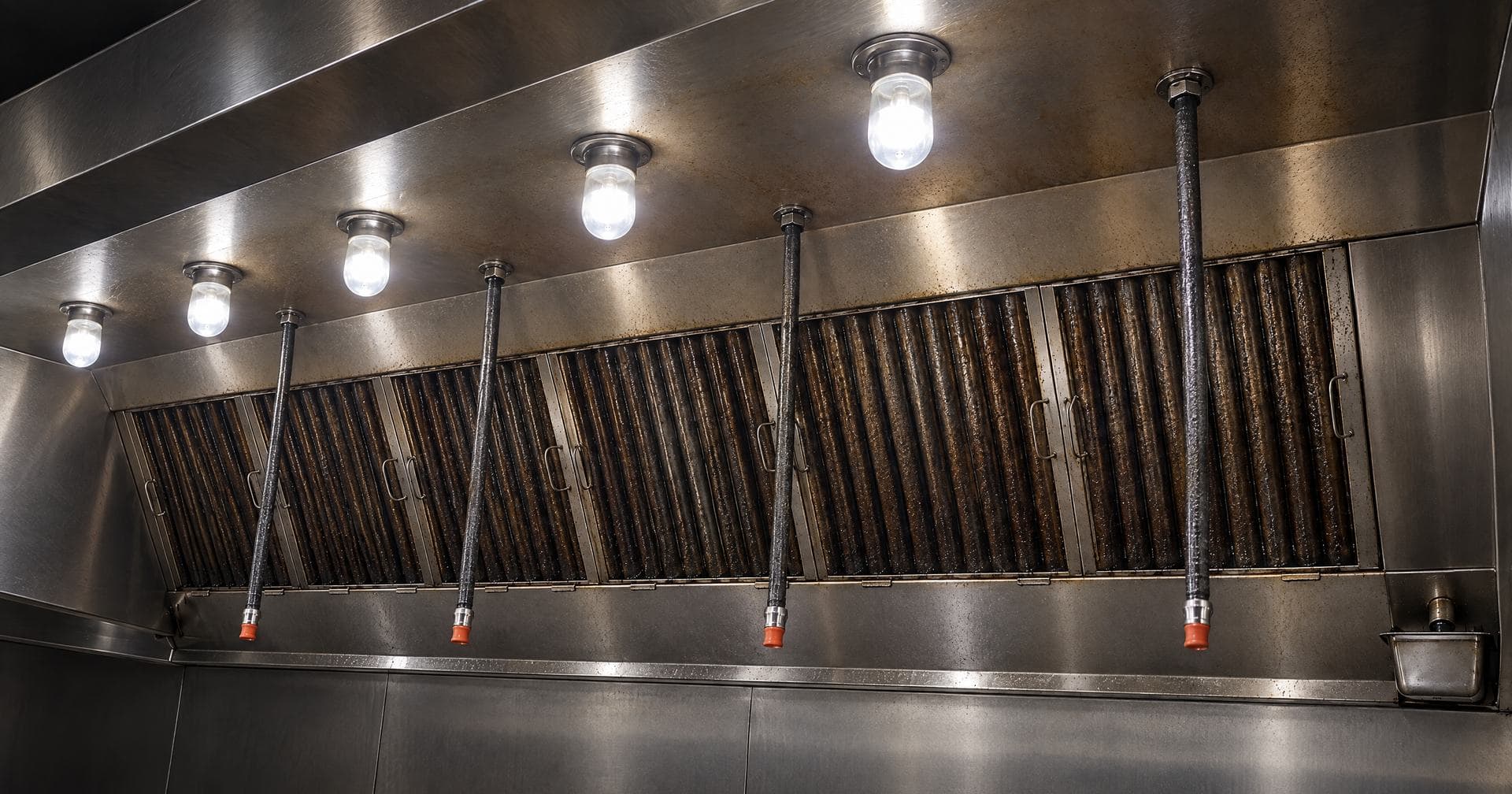
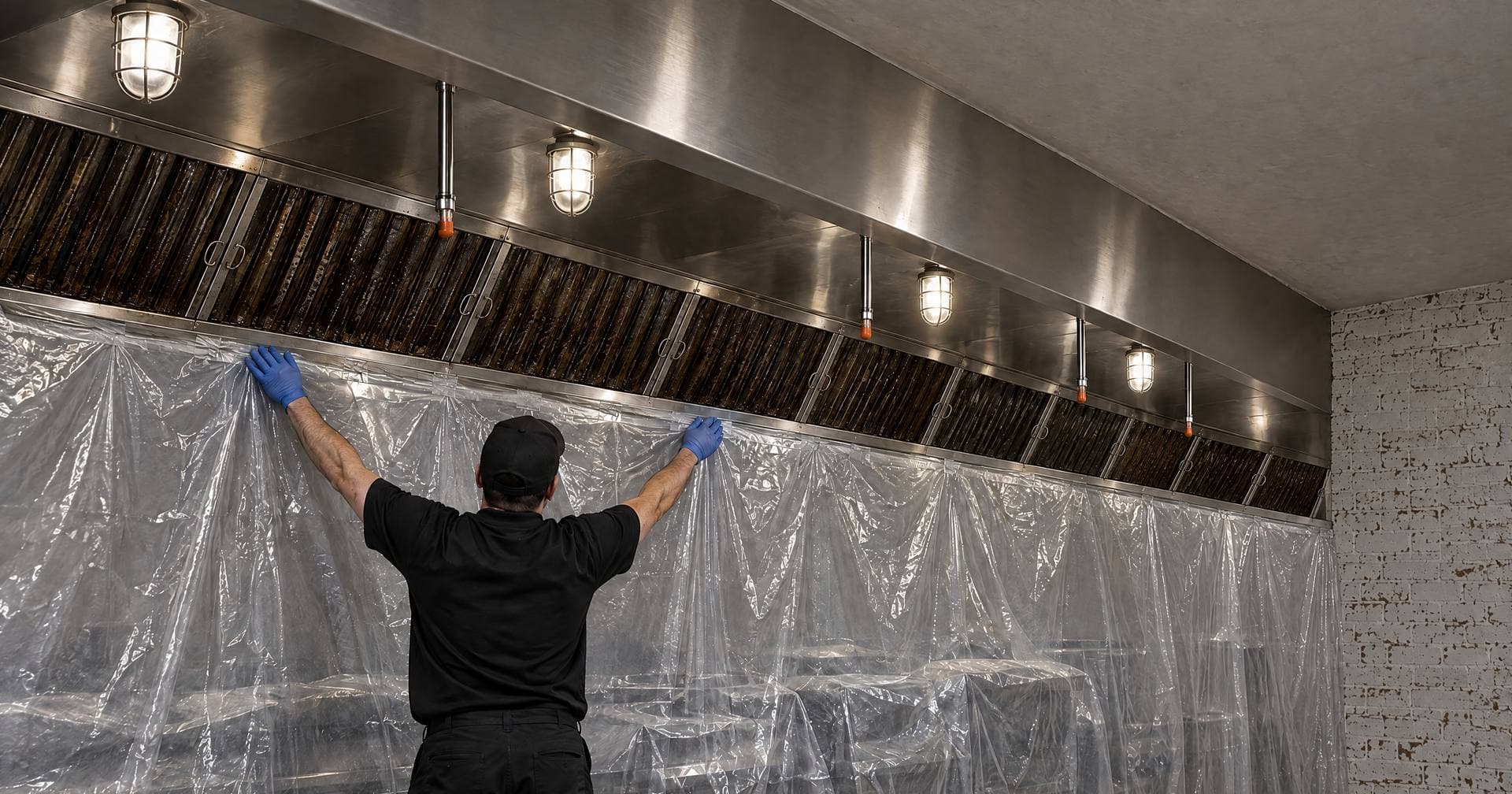
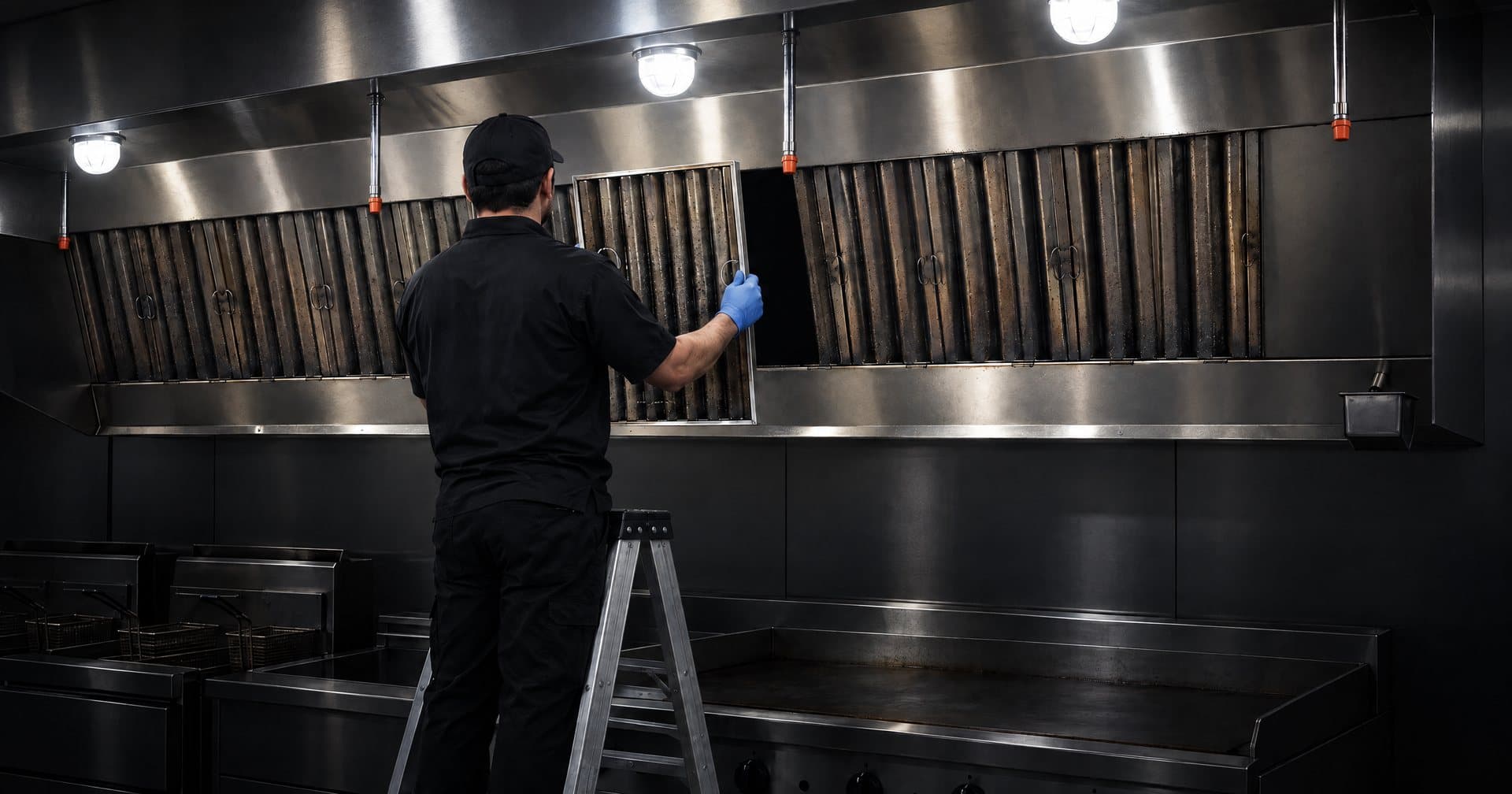
- Complete hood interior cleaning — all surfaces, baffle filters, grease gutters, and collection points degreased and inspected
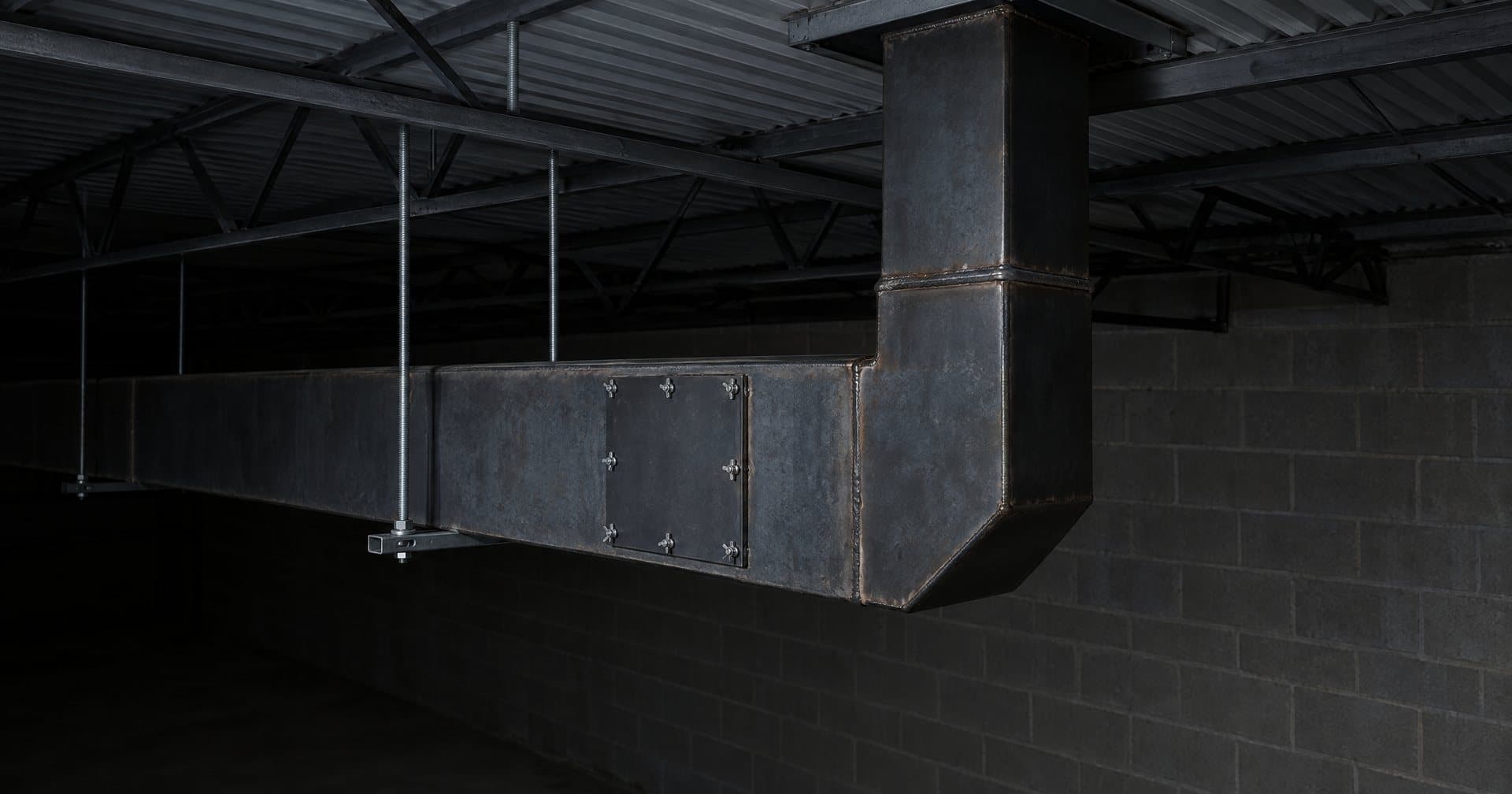
- Full duct system cleaning — every accessible section from hood connection to rooftop termination, including horizontal runs and direction changes
- Rooftop fan service — blade cleaning, housing degreasing, hinge kit operation, belt and bearing check
- Grease containment — rooftop cups emptied, containment pads checked, drainage pathways cleared
- Fire suppression system visual check — nozzle alignment verified, fusible links inspected, system tag checked for current service date
- Photographic documentation — before-and-after images of hood interior, duct access points, and rooftop equipment
- Service certificate — signed, dated, and available for fire marshal inspection
The Math Arlington Operators Need to Hear
Professional hood cleaning for a standard Arlington restaurant runs between three hundred and nine hundred dollars per service depending on system size and complexity. The average cost of a commercial kitchen grease fire — including direct damage, business interruption, and increased insurance premiums — starts at seventy-five thousand dollars and escalates from there. In a dense Arlington corridor where fire in one unit can damage neighboring businesses, spread to upper-floor residential units, or trigger building-wide evacuations, the downstream costs multiply.
Arlington built its restaurant culture on density, diversity, and walkability. Maintaining that culture requires maintaining the kitchens that make it possible. The exhaust system is not glamorous infrastructure, but it is the infrastructure that keeps the kitchen running, the fire marshal satisfied, and the insurance policy intact. In a county this dense, there is no room for a fire that should not have happened.