Your Exhaust System Is Not Just a Hood
You call it "the hood." Your staff calls it "the hood." Even your insurance paperwork probably just says "hood cleaning." But the stainless steel canopy hanging over your cooking line is only the first piece of a system that stretches from directly above your burners all the way through your ceiling, up through your building, and out to the rooftop.
Most restaurant owners in Virginia, DC, and Maryland have never seen the full picture. They know they need to get it cleaned — the fire marshal says so, the insurance company says so — but they have never had anyone explain what "it" actually is.
This is that explanation. Component by component, from the bottom of the system to the top, here is what makes up your commercial kitchen exhaust system, what each piece does, how it collects grease, and what a professional cleaning crew actually does when they show up at your restaurant.
The Hood Canopy: Your First Line of Capture
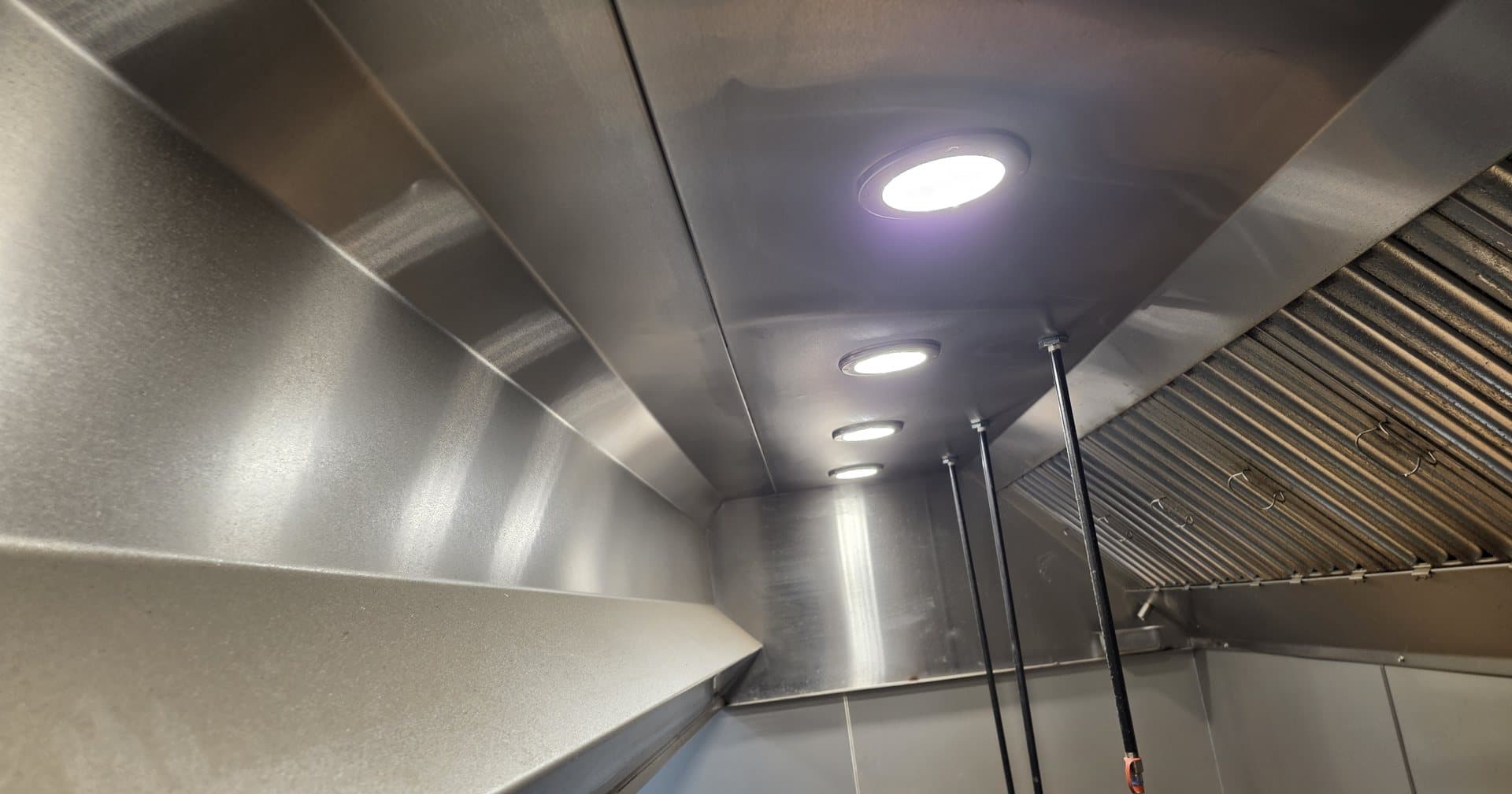
The hood itself is the visible part — the large stainless steel structure mounted above your cooking equipment. Its job is simple: capture. Every time your kitchen is operating, your cooktops, fryers, charbroilers, and ovens generate heat, smoke, steam, and grease-laden vapor. The hood canopy is designed to collect all of that before it spreads into the rest of your kitchen.
Hoods come in two main types. Type I hoods are installed above equipment that produces grease-laden vapors — your fryers, grills, ranges, and woks. These are the hoods that require regular professional cleaning under NFPA-96. Type II hoods are used above equipment that produces only heat and steam, like dishwashers and ovens. They do not require the same level of grease cleaning.
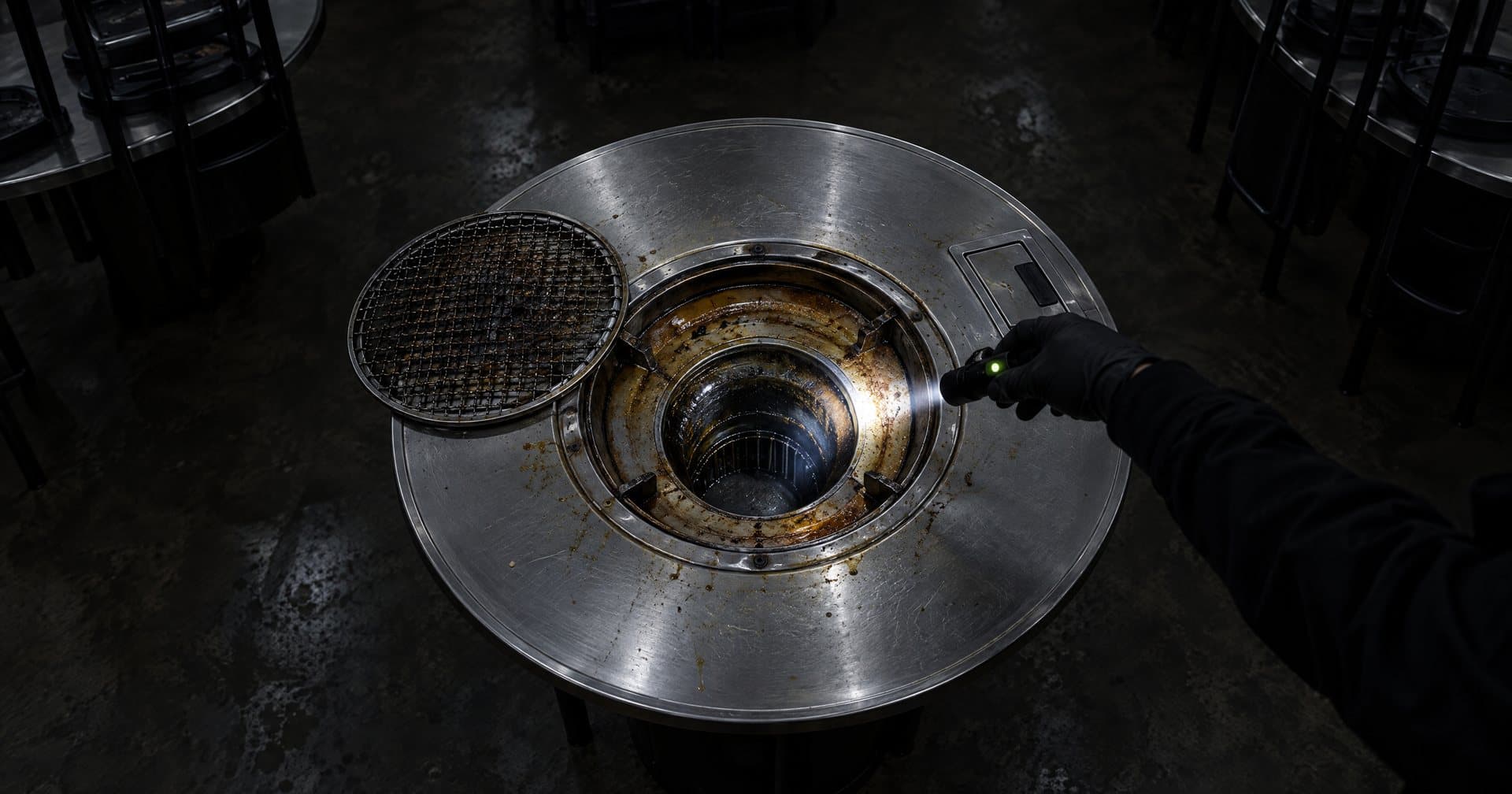
What goes wrong: Grease accumulates on the interior surfaces of the hood — the plenum area behind the filters, the corners, the light fixtures, and any joints or seams. This buildup is not always visible from below. A hood can look reasonably clean from the kitchen floor while carrying a significant grease load on its interior surfaces.
What gets cleaned: Professional technicians scrape and degrease all interior hood surfaces, including the plenum chamber, the gutters or troughs that channel grease to the collection cups, and any hard-to-reach corners. The exterior is wiped and polished, but the real work happens inside.
Baffle Filters: The Workhorses You Probably Ignore
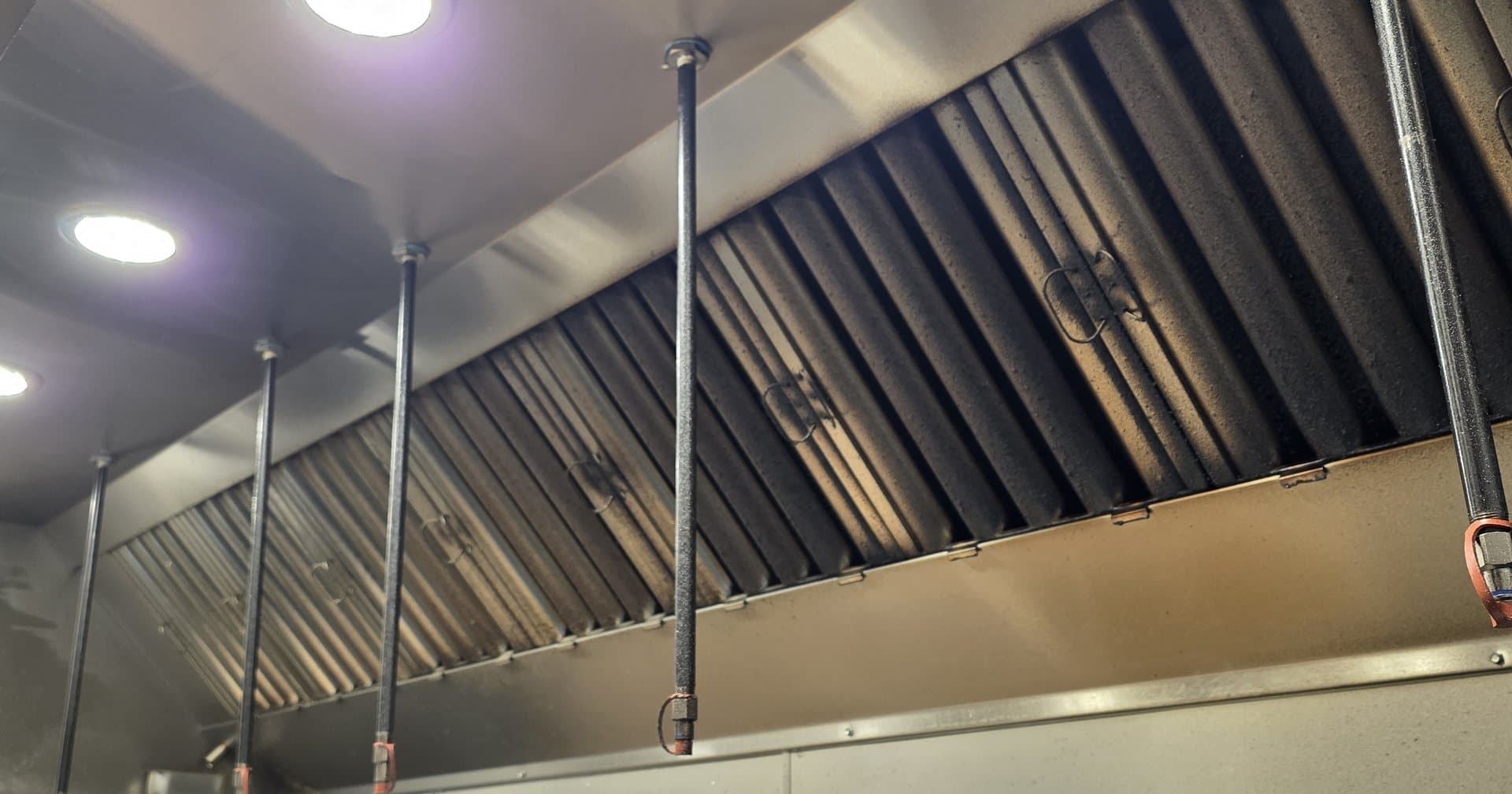
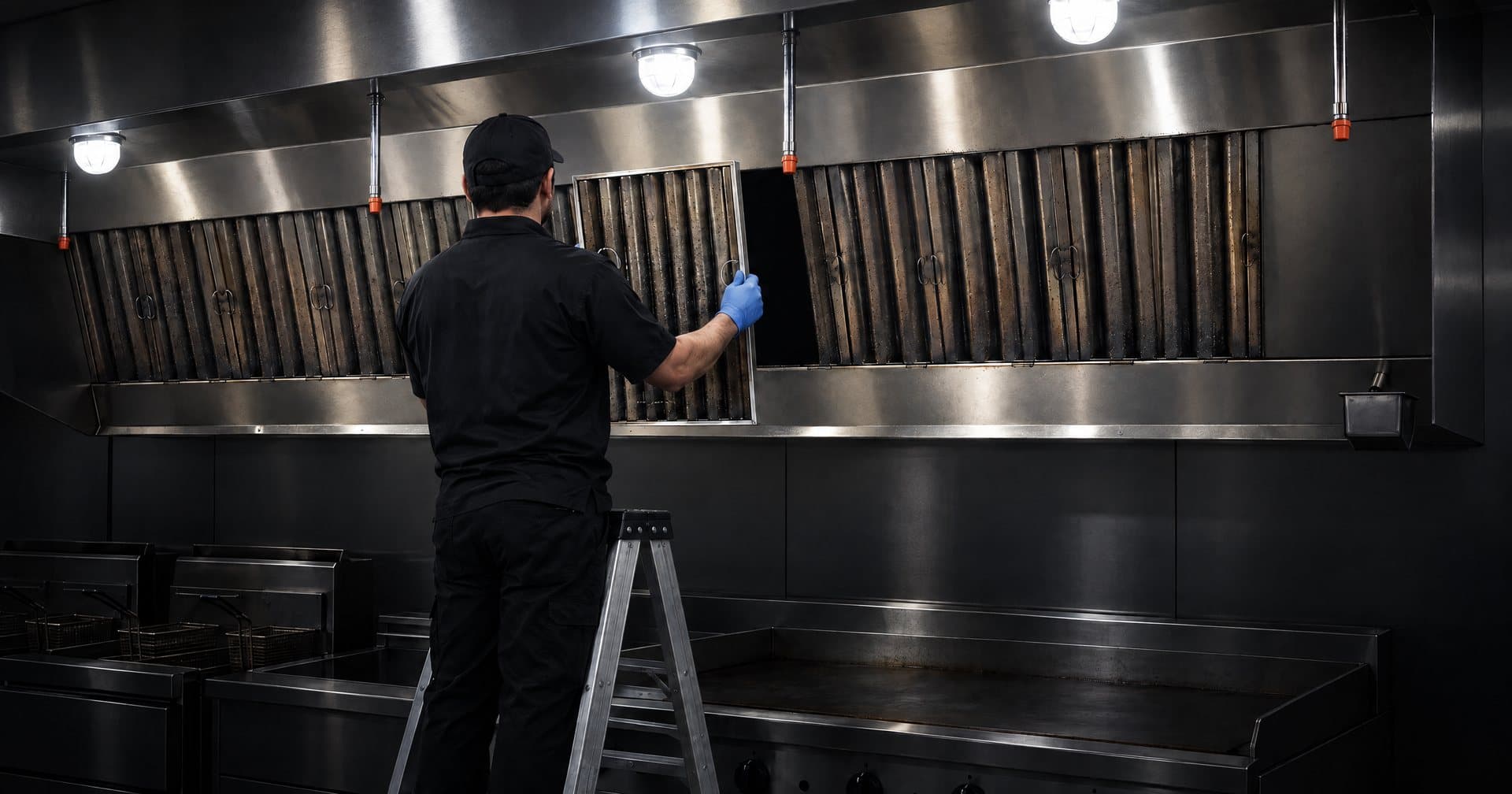
Those removable metal panels slotted into the bottom of your hood are baffle filters. They are the most important piece of daily maintenance in your entire exhaust system, and the most frequently neglected.
Baffle filters work by forcing the rising grease-laden air to change direction multiple times as it passes through the filter's angled baffles. Each change of direction causes grease particles to separate from the air and collect on the filter surfaces. The cleaner air continues up into the ductwork. The grease drains down into the collection trough below.
When they are clean, baffle filters capture a significant percentage of grease particles before they ever enter the ductwork. When they are not clean, they become a bottleneck. Grease-saturated filters cannot capture additional grease effectively, so more of it passes through into the ducts. They also restrict airflow, which means your exhaust fan has to work harder, your kitchen gets hotter, and smoke lingers over the cooking line.
What goes wrong: Filters that are not cleaned daily or at least several times per week become loaded with hardened grease. The baffles clog. Airflow drops. Grease that should be captured by the filters instead enters the ductwork, accelerating buildup in the most expensive part of the system to clean.
What gets cleaned: During a professional hood cleaning, filters are removed, soaked, degreased, and inspected for damage. Warped, bent, or corroded filters are flagged for replacement. But daily filter cleaning is your staff's responsibility — NFPA-96 puts this squarely on the restaurant. End-of-shift cleaning, either by hand scrubbing or running through a commercial dishwasher, should be a non-negotiable part of your closing checklist.
Grease Cups and Drip Troughs: Small Parts, Big Problems
Mounted at the lowest point of your hood are grease cups or collection containers. These catch the liquid grease that drains off the filters and interior hood surfaces. Most hoods have one at each end, sometimes more.
This is about as low-tech as it gets, but neglecting grease cups creates immediate problems. A full grease cup overflows. Overflowing grease runs down the exterior of the hood, onto the cooking line below, and directly onto open flames or hot surfaces. This is one of the most common ignition scenarios in commercial kitchens, and one of the most preventable.
What goes wrong: Grease cups fill up. Staff forgets to empty them. Liquid grease overflows onto cooking surfaces. In the best case, you have a mess to clean up. In the worst case, you have a grease fire. The drip troughs themselves can also corrode if not cleaned regularly, creating gaps where grease bypasses the collection system entirely.
What gets cleaned: All grease cups are emptied and degreased during professional service. Troughs are scraped, degreased, and inspected. But like filters, emptying grease cups should be a daily task for your kitchen staff. If your team is only dealing with these during professional cleanings, they are filling and potentially overflowing between services.
The Ductwork: The Part You Cannot See
This is where most of the money in a professional hood cleaning goes, and for good reason. The ductwork connects your hood to the exhaust fan on the roof. It runs through your ceiling, potentially through walls, and up through the building. You cannot see it, you cannot reach it, and you cannot clean it yourself.
Ductwork in commercial kitchen exhaust systems is typically made of welded carbon steel or stainless steel, and it is sized and routed based on your kitchen's layout and airflow requirements. Most systems have one or more access panels — small doors cut into the ductwork at strategic points — that allow technicians to reach inside for cleaning and inspection.
Inside the ductwork is where the most dangerous grease accumulation occurs. As grease-laden vapor travels upward through the ducts, it cools slightly, causing grease to condense on the duct walls. Over time, this condensation builds into a thick, sticky layer that hardens into a waxy or even rock-like coating. This is the fuel that turns a small kitchen flare-up into a duct fire that races through your building.
What goes wrong: Grease builds up layer by layer, completely out of sight. In high-volume kitchens without regular cleaning, duct walls can accumulate deposits thick enough to significantly reduce the internal diameter of the duct, restricting airflow and creating an enormous fire load. Horizontal runs and elbows collect grease the fastest because gravity is not helping it drain.
What gets cleaned: Certified technicians access the ductwork through access panels and scrape, degrease, and pressure wash the interior surfaces. Every accessible section of the duct must be cleaned from the hood connection to the fan — NFPA-96 is explicit about this. If your cleaning company is only cleaning the hood and not entering the ductwork, you are not getting an NFPA-96 compliant service and your documentation is essentially worthless.
This is the most important thing to understand about professional hood cleaning: the ductwork is the whole point. The hood and filters you can manage day to day. The ductwork requires professional equipment, trained technicians, and access points that only a certified crew can use safely.
The Exhaust Fan: Your Rooftop Workhorse
At the top of the system, mounted on your roof, sits the exhaust fan. This is the engine that drives everything. When your kitchen is operating, the exhaust fan creates negative pressure in the ductwork, pulling air from the kitchen, through the hood, past the filters, up through the ducts, and out of the building.
Most commercial kitchen exhaust fans are upblast fans — the motor and fan blades sit in a housing on the roof, and they push the exhaust air straight up and away from the building. They run for every hour your kitchen is open, often 12 to 16 hours a day, and they are exposed to weather, temperature extremes, and a constant stream of grease-laden exhaust.
What goes wrong: Grease coats the fan blades, the interior of the fan housing, and the hinge assembly. As grease builds up on the blades, the fan becomes unbalanced, which causes vibration, bearing wear, and eventually motor failure. A grease-loaded fan also moves less air, which reduces your entire system's effectiveness. On the exterior, grease spills out of the fan housing and onto your roof. Over time, this creates a grease stain that can damage roofing material and create a slip hazard for anyone who accesses the roof.
What gets cleaned: Technicians open the fan housing on its hinge, scrape and degrease the blades, interior housing, hinge, and belt. The fan belt (if applicable) is inspected for wear. The grease containment system around the base of the fan is cleaned. Any grease that has spilled onto the roof surface is addressed. A properly cleaned exhaust fan runs quieter, moves more air, uses less electricity, and lasts significantly longer.
Grease Containment on the Roof: The Part Everyone Forgets
Around the base of your rooftop exhaust fan, there should be a grease containment system — typically a grease guard, grease pillow, or a small dam built around the fan curb. Its job is to prevent grease runoff from spreading across your roof.
This is not glamorous, and it is not something most restaurant owners ever think about. But grease on a commercial roof is a real problem. It degrades roofing membranes, voids roof warranties, attracts pests, and creates a genuinely dangerous slip hazard. If your building shares a roof with other tenants, grease migration becomes a neighbor problem and potentially a legal one.
What goes wrong: Containment systems fill up, overflow, or degrade in the weather. Grease migrates across the roof. The roofing material beneath the fan deteriorates. Your landlord sends you a bill for roof repairs. Your roof warranty is voided.
What gets cleaned: Grease containment devices are emptied, cleaned, or replaced during professional service. The roof area immediately surrounding the fan is degreased. Any visible grease migration is addressed. If you do not currently have a grease containment system, a professional cleaning company should flag this and recommend one.
How It All Works Together
Here is the full picture: your burners produce heat and grease-laden vapor. The hood canopy captures it. Baffle filters separate the grease from the air. Grease drains into collection cups. The remaining vapor enters the ductwork. The exhaust fan on the roof pulls it through the ducts and expels it outside. At every stage, grease is being deposited on system surfaces.
When every component is clean and working, the system is remarkably effective. It keeps your kitchen cool, the air clear, and fire risk low. When any component fails or is neglected, the entire system degrades. Dirty filters mean dirtier ducts. Dirtier ducts mean a harder-working fan. A harder-working fan means higher energy costs, more noise, and shorter equipment life. And throughout all of it, grease accumulation means fire risk is climbing.
The system fails as a chain, and it must be maintained as a system.
What a Professional Cleaning Actually Looks Like
When a certified crew arrives at your restaurant for a full exhaust system cleaning, here is what should happen:
- Pre-inspection. The crew inspects the system, notes current conditions, and identifies any access issues or concerns.
- Kitchen preparation. Cooking surfaces, equipment, and surrounding areas are covered with plastic sheeting to protect against water and chemical runoff.
- Filter removal. All baffle filters are removed and set aside for soaking and degreasing.
- Hood cleaning. Interior hood surfaces, plenum, gutters, and grease cups are scraped and degreased using commercial-grade solutions and pressure washing.
- Ductwork cleaning. Technicians access the ductwork through access panels and clean all reachable interior surfaces from hood to fan.
- Fan cleaning. The rooftop fan housing is opened. Blades, housing interior, hinge, and belt are cleaned and inspected.
- Roof grease containment. Grease containment devices are cleaned or replaced. Surrounding roof area is degreased.
- Filter reinstallation. Clean filters are reinstalled. Damaged filters are flagged.
- Post-inspection. The crew documents the completed work, notes any deficiencies or recommended repairs, and provides before-and-after photos.
- Certification. You receive a cleaning certificate with date, scope of work, and technician signature — the document your insurance company and fire marshal will ask for.
The entire process typically takes two to four hours for a standard single-hood system, performed after your kitchen closes for the night.
Know What You Are Paying For
Not all hood cleaning services are equal. Some companies will spray down the visible hood surfaces, wipe the filters, and hand you a certificate. That is not NFPA-96 compliant cleaning, and that certificate will not protect you when your fire marshal inspects or your insurance company investigates a claim.
Ask your cleaning provider specifically: Do you access and clean the interior ductwork from hood to fan? If the answer is anything other than a clear yes, you are not getting a complete service.
Schedule Your Free System Assessment
Qwick Services and Solutions provides full-system commercial kitchen exhaust cleaning throughout Virginia, Washington DC, and Maryland. Our NFPA-96 certified technicians clean every component — hood, filters, ductwork, fan, and rooftop containment — with complete documentation for your records.
Not sure what condition your system is in? We offer free exhaust system assessments for restaurants across the DMV. We will walk through your system from hood to rooftop, explain exactly what we find, and give you a clear picture of where you stand.
Your exhaust system is more than a hood. Make sure it is being treated that way.
Keep reading: how much commercial hood cleaning costs and how often it needs to be done.
For the standard that defines this scope, see what NFPA 96 is and what it requires.