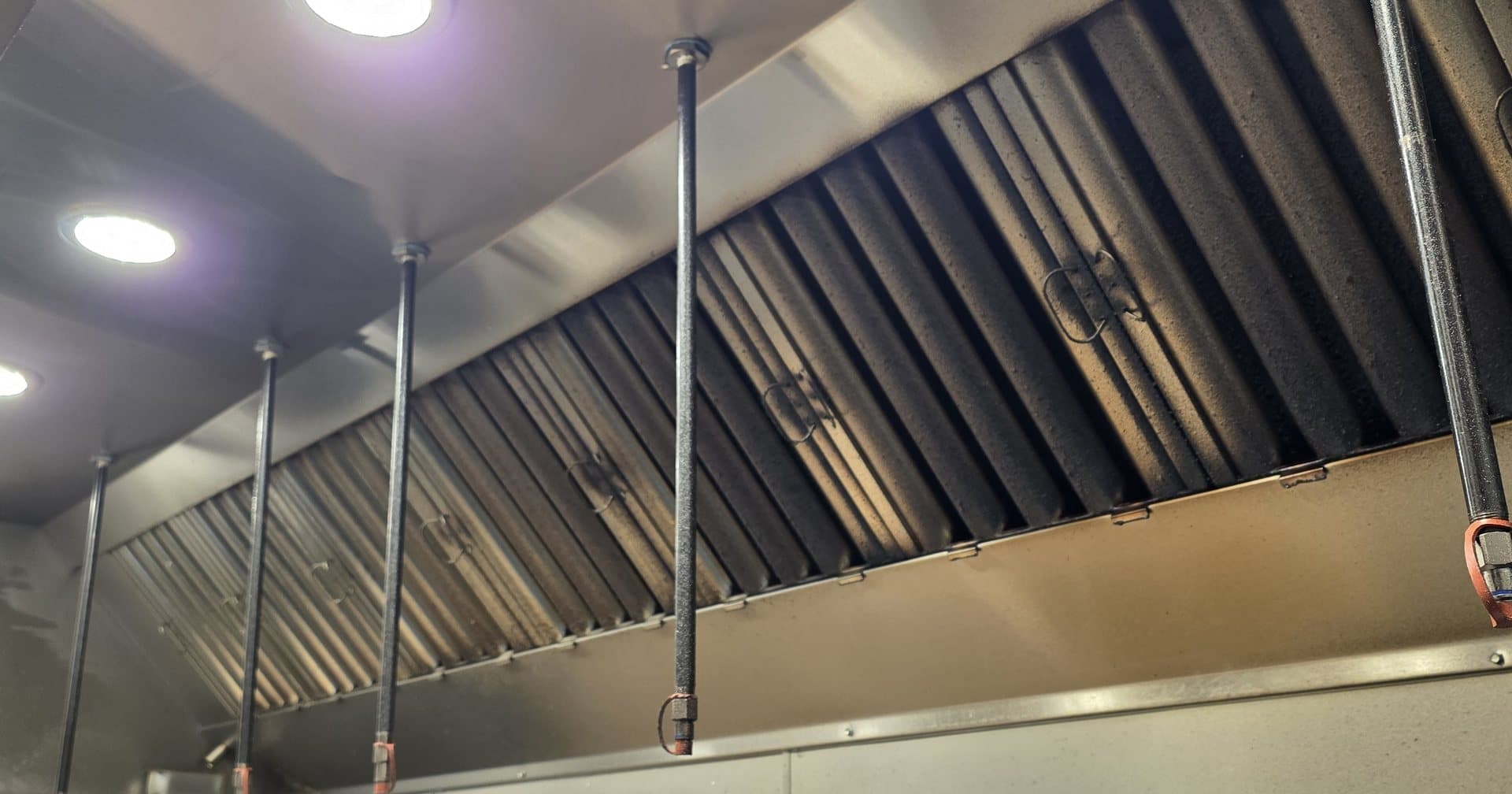
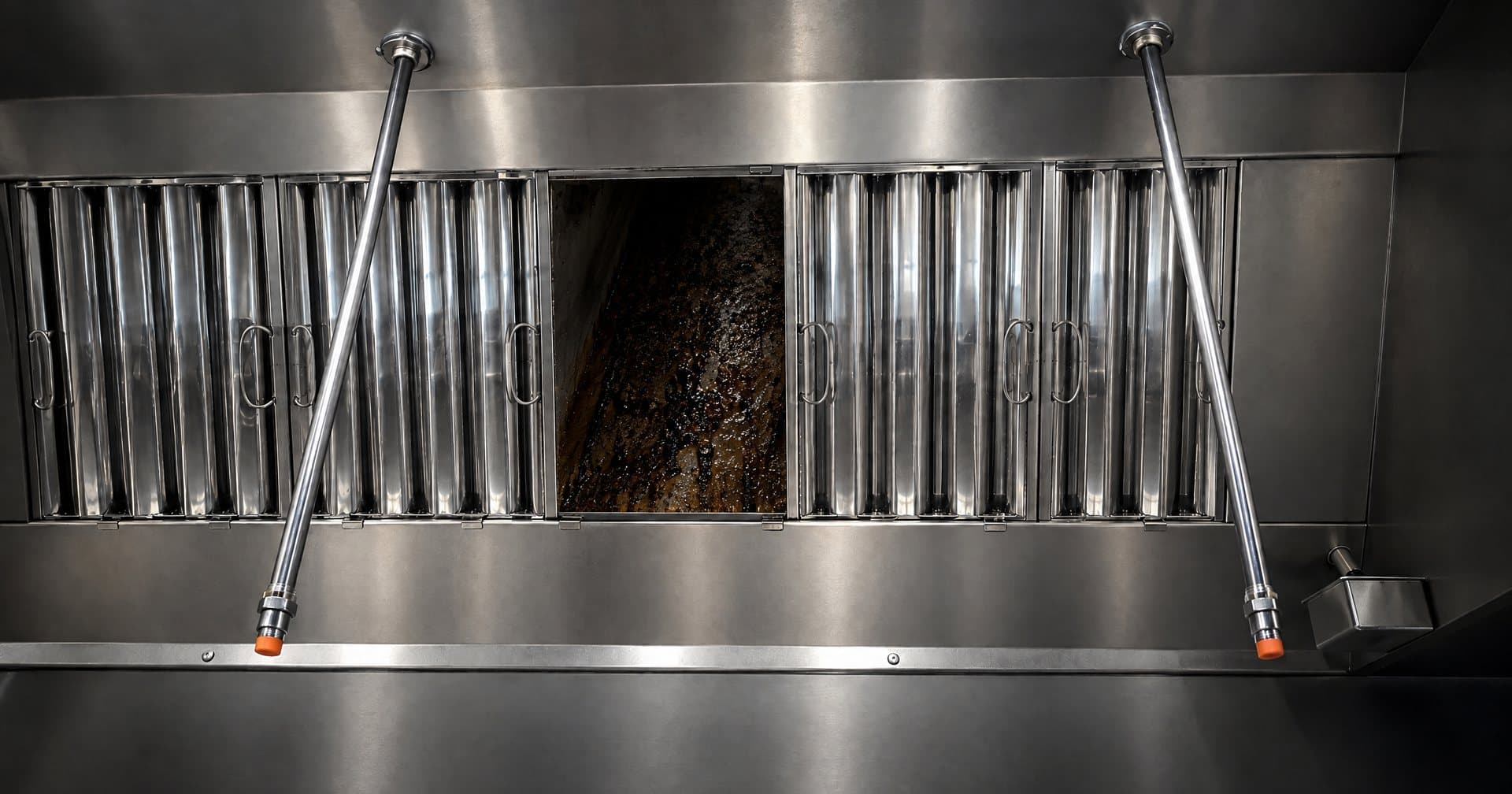
A fire marshal pulls a baffle filter off your hood, runs a gloved finger along the inside of the plenum, and holds it up. There is a quarter-inch of soft grease on the metal. The question that follows is the one every restaurant operator eventually faces: "When was this last cleaned?" And the answer — quarterly, like the contract says — turns out not to be the right answer for this kitchen.
That gap, between what the contract scheduled and what the kitchen actually needed, is where most hood-cleaning trouble lives. The honest answer to "how often should commercial kitchen hoods be cleaned" is not a single number. It is a category your kitchen falls into, plus a condition trigger that can move you up a tier regardless of the calendar.
By the end of this post you will know exactly which NFPA 96 frequency tier your kitchen belongs to, the grease-depth rule that overrides the calendar, the warning signs that mean clean sooner, and what fire marshals across the DC, Maryland, and Virginia region expect on top of the national minimum.
The Four NFPA 96 Frequency Tiers
Restaurant hood cleaning frequency in the United States is governed by NFPA 96, the National Fire Protection Association's Standard for Ventilation Control and Fire Protection of Commercial Cooking Operations. Its inspection-and-cleaning table sorts every commercial kitchen into one of four buckets based on the type and volume of cooking:
- Monthly — solid-fuel cooking. Any operation cooking over wood, charcoal, or mesquite. Solid fuel produces creosote and heavy carbon deposits that build fast and burn hot, so the standard puts these systems on the most aggressive schedule.
- Quarterly — high-volume operations. 24-hour kitchens, heavy charbroiling, and wok cooking. These methods throw off a thick, greasy aerosol for hours on end, loading the exhaust system faster than conventional cooking.
- Semi-annually — moderate-volume operations. The typical sit-down restaurant or busy café running standard gas-range and griddle cooking through a normal service day.
- Annually — low-volume operations. Churches, day camps, seasonal concessions, senior centers, and other kitchens that cook lightly and infrequently.
This is the NFPA 96 cleaning schedule in its plainest form, and it is where most online answers stop. But reading the table as a fixed calendar is exactly the mistake that leaves grease on the plenum when the marshal shows up.
The Detail Most Competitors Miss: Inspection Plus a Grease-Depth Trigger
Here is the nuance almost every "how often does NFPA 96 require hood cleaning" article gets wrong. The table above is an inspection schedule, not a fixed cleaning calendar. NFPA 96 requires the system to be inspected at the listed frequency, and then cleaned whenever an inspection finds measurable grease accumulation — regardless of how recently it was last cleaned.
The standard sets a concrete trigger: when a measurable depth of combustible grease deposit is found, the contaminated surfaces must be cleaned down to bare metal. Industry practice treats that threshold conservatively — many technicians and authorities act on grease deposits in the range of an eighth of an inch (about the thickness of two stacked credit cards). Reach that depth and you are due, even if your "quarterly" date is six weeks out.
This reframes the whole question. Your frequency tier sets how often a trained eye must look at the system. The grease load determines when it must actually be cleaned. A high-output kitchen on a quarterly inspection may genuinely need cleaning every month; a light-use kitchen on a semi-annual inspection may pass with a wipe-down. The schedule is a floor for looking, not a ceiling for cleaning.
Which Category Is My Kitchen? A Simple Decision Guide
Walk these questions in order and stop at the first "yes." That is your tier.
- Do you cook over wood, charcoal, or mesquite? You are monthly. Stop here.
- Do you run 24 hours, charbroil heavily, or cook on woks for much of the day? You are quarterly at minimum — and a strong candidate for monthly if the volume is high.
- Are you a standard full-service restaurant or busy café on gas ranges and griddles? You are semi-annual — but watch the grease-depth trigger, because a busy season can push you to quarterly.
- Do you cook lightly and infrequently — a church hall, a day camp, a seasonal stand? You are annual.
If you are genuinely on the line between two tiers, choose the more frequent one. The marginal cost of one extra cleaning is a rounding error next to a single deficiency notice — or a grease fire. For the underlying scope of a compliant cleaning, see what a full commercial hood cleaning actually covers, hood interior to rooftop fan.
Signs You Need Cleaning Sooner Than the Calendar Says
Kitchens change — a new menu, a busier season, a broken make-up air unit — and grease can cross the line between scheduled visits. The signals:
- Visible grease dripping at filter seams, pooling on the hood lip, or beading on duct access panels.
- A persistent greasy odor in the dining room or a smoky haze that lingers over the line during service.
- Poor airflow — smoke rolling out from under the hood instead of being pulled up, or filters that load up within days of a clean.
- Filters that won't come clean in the dish pit no matter how long they soak, which usually means the grease is already past the filters and into the plenum and duct.
Any one of these means call for an inspection now rather than waiting for the date on the contract. A greasy hood and duct system is not a housekeeping issue — it is stored fuel sitting directly above an open flame.
What DMV Fire Marshals Expect
NFPA 96 is the national floor. In the DC, Maryland, and Virginia market, the Authority Having Jurisdiction can — and routinely does — require stricter intervals or more documentation than the federal minimum.
- Washington, DC. DC Fire and EMS expects current cleaning documentation on site and applies risk-based scrutiny to high-grease-load operations. A clean certificate and a dated sticker are the baseline an inspector looks for first.
- Northern Virginia. Fairfax, Loudoun, Arlington, and Prince William fire marshals enforce NFPA 96 closely and can mandate more frequent cleaning for a kitchen they judge high-risk, independent of the operator's own tier assessment.
- Maryland. Montgomery, Prince George's, Howard, and neighboring counties fold NFPA 96 into state fire code and check the documentation file — increasingly in the digital format the most recent edition of the standard expects.
The practical takeaway: your NFPA 96 tier is the minimum, but your local marshal sets the bar you have to clear. If your AHJ requires "every quarter" for a kitchen the table would put on semi-annual, the AHJ wins. Our DMV NFPA 96 guide covers how the standard is applied jurisdiction by jurisdiction.
Building a Schedule You Can Defend
The operators who never get caught off guard do three things. They place their kitchen in the correct tier honestly — counting the charbroiler and the wok station, not just the covers. They let the grease-depth trigger pull cleanings forward when the kitchen runs hot. And they keep every certificate in one file the marshal can see in thirty seconds.
While you set that cadence, schedule the systems that fail on the same timeline — the grease trap especially, which carries its own service interval. One vendor handling hood, duct, and grease service means one schedule and one documentation file.
Frequently Asked Questions
How often does NFPA 96 require hood cleaning?
NFPA 96 sets four inspection tiers: monthly for solid-fuel cooking, quarterly for high-volume operations such as 24-hour kitchens, heavy charbroiling, and wok cooking, semi-annually for moderate-volume restaurants, and annually for low-volume operations like churches and seasonal stands. Cleaning happens at the inspection interval or sooner if grease accumulation is found.
Is quarterly hood cleaning enough for my restaurant?
Quarterly is the NFPA 96 minimum for high-volume operations, but it is the right answer only if your inspections confirm the grease load stays in check. A heavy charbroil or wok kitchen can build measurable grease in weeks and may need monthly cleaning. A standard sit-down restaurant may sit comfortably on semi-annual. The grease-depth trigger, not the contract, is the real test.
What is the NFPA 96 grease-depth cleaning trigger?
NFPA 96 requires cleaning whenever a measurable depth of combustible grease is found on the exhaust surfaces, regardless of how recently the system was last cleaned. Industry practice acts conservatively — commonly around an eighth of an inch of deposit. Reaching that depth means the system is due, even if the scheduled date has not yet arrived.
Do DMV jurisdictions require more frequent cleaning than NFPA 96?
They can. NFPA 96 is the national minimum, but fire marshals in DC, Maryland, and Virginia have the authority to require stricter intervals or additional documentation for kitchens they judge high-risk. If your local Authority Having Jurisdiction specifies a tighter schedule than the NFPA 96 table, that local requirement controls.
The Bottom Line
How often your commercial kitchen hood should be cleaned comes down to two answers working together: the NFPA 96 tier your cooking type places you in, and the grease-depth trigger that pulls a cleaning forward whenever the system loads up early. Get the tier right, watch for the warning signs, and meet whatever your DMV fire marshal asks on top of the federal floor.
Not sure which tier you are in? Send a few photos of your hood and filters, or book a free on-site visit, and we will tell you the honest cadence your kitchen needs. Get a free schedule assessment or call (202) 643-8113.
Keep reading: the cadence here is one piece of what NFPA 96 requires — and it affects how much hood cleaning costs.